TL;DR:
- Social engagement at concerts includes physical actions like dancing and digital activities such as sharing photos and setlists. TikTok has the highest engagement rate for music content at 3.70%, outpacing other platforms significantly. Both personal documentation and community rituals are vital for creating memorable concert experiences.
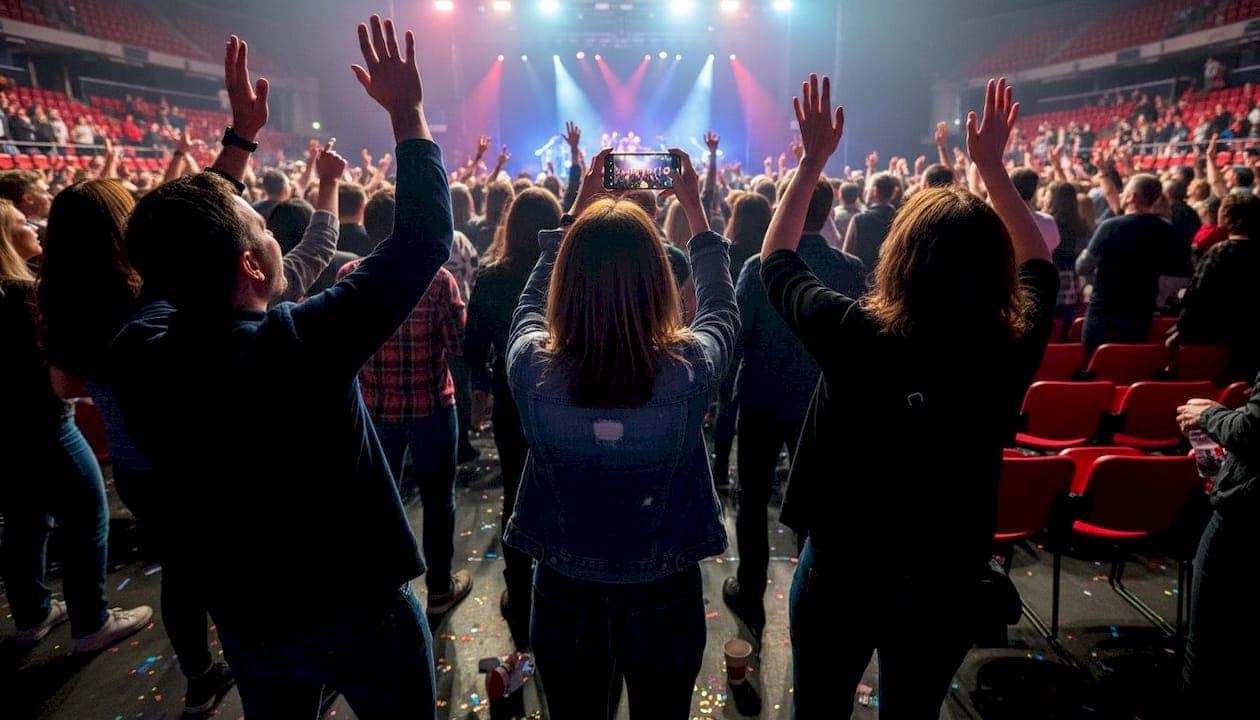
Music fans have always known that concerts are about more than just the music. But here's something that might surprise you: TikTok engagement rates for music and performance arts jumped 49% year over year, reaching 3.70% in 2026. That number tells a bigger story. Social engagement at concerts is no longer just about singing along with strangers or throwing your hands in the air. It spans everything from synchronized crowd movement to uploading a blurry stage photo at midnight. This guide breaks down what social engagement really means, how it works, why it matters, and how you can use it to get more out of every show you attend.
Table of Contents
- Defining social engagement at concerts
- How mechanics drive engagement: movement and sharing
- Benchmarking engagement: metrics and trends
- Personal documentation: boosting engagement and memories
- Nuances: individual vs communal, virtual trends, and micro-events
- A fresh perspective: why combining personal documentation with community rituals creates deeper concert memories
- Enhance your concert journey with Gigvault
- Frequently asked questions
Key Takeaways
| Point | Details |
|---|---|
| Engagement is multidimensional | Concert engagement includes both communal actions and digital documentation for richer experiences. |
| Apps empower concert fans | Platforms like Gigvault and Concert Archives help you log, share, and relive your concert history. |
| Benchmarks reveal trends | TikTok dominates music engagement rates, while micro-events and virtual shows are rising quickly. |
| Balance is key | Combining community rituals with personal documentation creates the most powerful concert memories. |
Defining social engagement at concerts
Social engagement is one of those phrases that gets used a lot but rarely gets defined well. In the concert world, it covers a surprisingly wide range of behaviors, and understanding that range changes how you think about your own experience.
Physical and digital concert engagement both count. On the physical side, you have things like clapping in unison, singing along, dancing with strangers, and sharing a moment of silence before a beloved song drops. These are communal rituals that bond fans together in real time. On the digital side, you have logging your attendance, uploading photos and videos, writing reviews, sharing setlists, and following friends who were at the same show.
Here's a quick look at what social engagement actually includes:
- Synchronized movement like dancing, clapping, or swaying together
- Communal singing during anthems or fan favorites
- Posting and tagging on social media during or after the show
- Logging attendance on concert tracking apps
- Uploading media including photos, videos, and voice memos
- Sharing setlists and writing ratings or reviews
- Following friends and discovering mutual concert histories
"The richest forms of concert engagement blend what happens in the crowd with what you capture and share afterward. Neither one is complete without the other."
What makes this interesting is that fans shape community concert engagement from both directions. Artists and venues create the environment, but fans decide how deeply they engage, both in the room and online. Understanding that you have agency over both sides of this equation is the first step toward a richer concert life. And yes, concerts create social bonds that go far beyond the night itself.
How mechanics drive engagement: movement and sharing
Now that we've defined engagement, let's analyze the mechanisms that shape it.
The physical side of engagement has a fascinating science behind it. Movement entrainment, which is when your body naturally syncs to a beat, is strongest at tempos between 110 and 120 BPM and in unseated venues where fans can move freely. Think general admission floors versus theater-style seating. When you're standing in a crowd and the bass hits at just the right tempo, your body responds almost automatically. That shared physical response is a huge part of what makes concerts feel electric.
On the digital side, the mechanics are just as deliberate. Here's how fans typically engage through apps:
- Check in to the show using a concert tracking app
- Upload photos and videos from the floor or balcony
- Log the setlist and rate individual songs or the full performance
- Follow friends who attended the same show
- Share your stats, like total shows attended or cities visited
Not all apps are built the same. Here's a quick comparison of popular concert engagement tools:
| App | Key feature | Social component |
|---|---|---|
| Gigvault | Full concert diary with AI insights | Mutual connection discovery |
| Setlist.fm | Crowdsourced setlists | Community edits and comments |
| ConcertCritic | Verified check-ins and reviews | Social feed and stats |
| Concert Archives | Show history logging | Community show pages |
For a deeper look at your options, check out the best concert tracking apps available right now.
TikTok engagement for music content sits at 3.70%, compared to Instagram at 0.48% and Facebook/X at just 0.15%. That gap is enormous and tells you where the energy lives online after a show.
Pro Tip: Short vertical videos shot from the crowd, even shaky ones, tend to outperform polished content on TikTok. Authenticity wins. Pair that with a documented live music experience and you've got content that lasts long after the encore.
You can also explore tools like ConcertCritic for verified check-ins and a social feed built specifically for concert fans.
Benchmarking engagement: metrics and trends
Understanding mechanics is only part of the picture. Let's see how engagement is actually quantified.
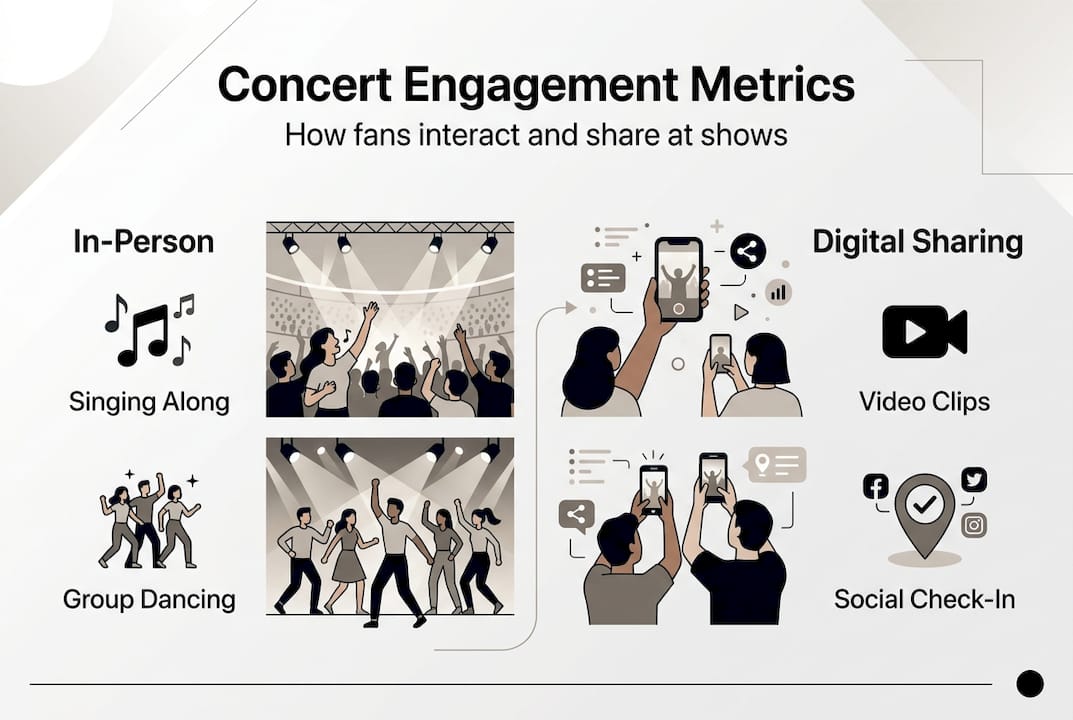
Artists, venues, and festival organizers all track social engagement using a mix of platform metrics and real-world signals. The goal is to understand how deeply fans connect with an event, not just how many people showed up.
Here are the key performance indicators (KPIs) most commonly used:
- Social engagement rate: likes, comments, shares, and saves divided by total followers
- Hashtag traction: volume and reach of event-specific hashtags
- User-generated content (UGC): photos, videos, and posts created by fans
- Sentiment analysis: positive vs. negative tone in fan posts and reviews
- Repeat attendance: fans who return for multiple shows or tours
- Sign-ups and follows: new fans acquired through event promotion
Here's how the major platforms stack up for music content in 2026:
| Platform | Engagement rate | Best content type |
|---|---|---|
| TikTok | 3.70% | Short video, live clips |
| 0.48% | Photos, Reels, Stories | |
| Facebook/X | 0.15% | Text posts, event pages |
TikTok's engagement rate jumped 49% year over year, making it the dominant platform for music fan content by a wide margin.
"Festival KPIs now include hashtag mentions, share velocity, and sentiment scores alongside traditional ticket sales data."
For fans, this data isn't just interesting trivia. It shapes how you share concert insights and which platforms reward your effort. If you're posting after a show, TikTok gives your content the best chance of reaching other fans who were there or wish they were.
Personal documentation: boosting engagement and memories
Metrics provide perspective, but how can you take action? Here's how personal documentation strengthens your concert journey.
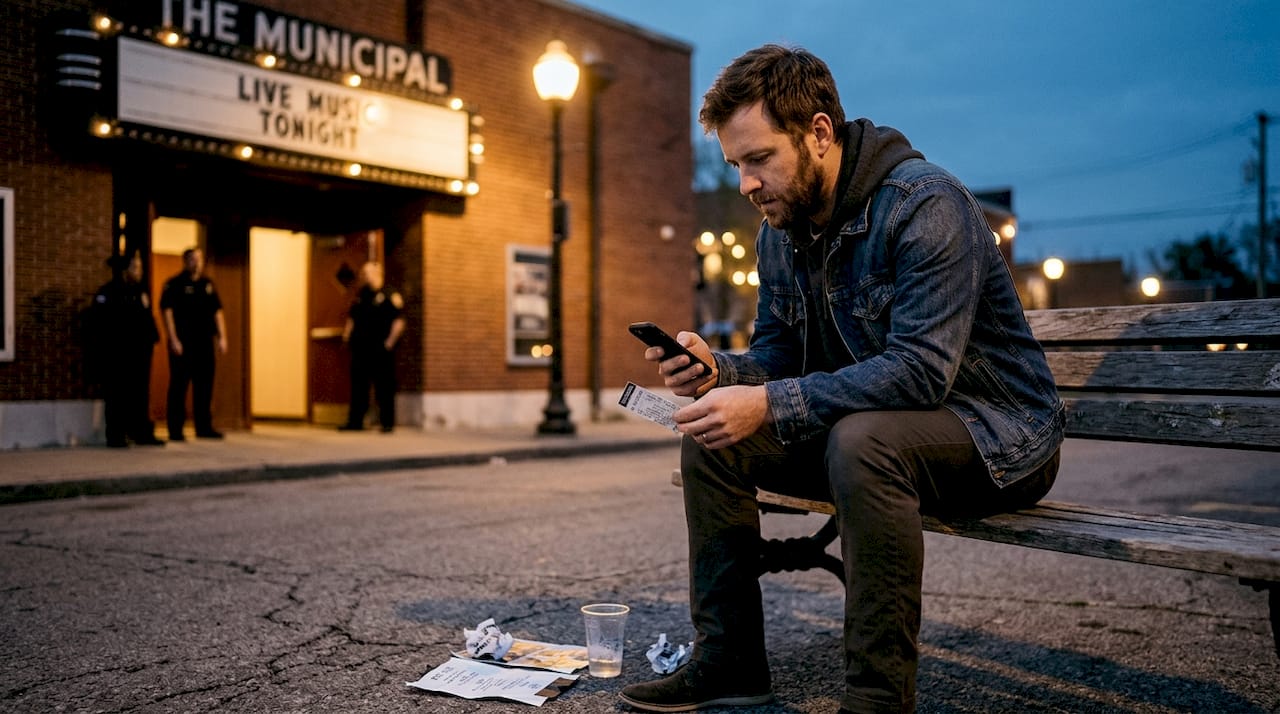
Logging your shows and sharing your media does something powerful. It turns a single night into a lasting memory and connects you with other fans who share your taste. Fan engagement apps like Concert Archives, Setlist.fm, and ConcertCritic let you track your full concert history, share photos and videos, write notes, get personal stats, and earn verified check-ins.
Here's how to get the most out of personal documentation:
- Check in immediately when the show starts, not after
- Upload your best photo while the energy is still fresh
- Log the setlist song by song if you can, or confirm the crowd-sourced version
- Rate the show and write a short note about what made it special
- Follow friends who attended and see how your experience compares
- Review your stats over time, like total shows, artists seen, and cities visited
Pro Tip: Don't wait until you get home to log the show. A quick check-in and one photo upload during the set break takes less than two minutes and locks in the memory while it's vivid.
The act of tracking your concert history also reveals patterns you'd never notice otherwise. Which artists do you keep coming back to? Which venues feel like home? These insights deepen your identity as a music fan and give you something real to share with others. Pair that with the right apps to track concerts and your archive starts to feel like a living scrapbook.
Nuances: individual vs communal, virtual trends, and micro-events
Concert engagement looks different for every fan. Let's highlight the nuances, edge cases, and evolving trends.
Not every fan wants to be in the middle of a sweaty crowd singing every word. And that's completely valid. Individual concert experiences are legitimate and fulfilling, especially when the crowd's energy validates your solo emotional response to the music.
Here's how engagement breaks down across different fan types:
- Communal fans thrive on crowd rituals, group singalongs, and shared energy
- Individual fans prefer absorbing the music personally, often standing back from the crowd
- Virtual attendees choose livestreams for cost savings, with 69% citing affordability as their main reason
- Micro-event fans seek intimate shows with 1 to 250 attendees for a closer connection
"63% of fans actively seek out micro-events, and the micro-event segment has grown 23% in recent years, signaling a real shift away from stadium-scale experiences."
This growth matters. Micro-events create a different kind of social engagement, one that's quieter, more personal, and often more memorable. You're more likely to talk to the artist after the show, connect with a handful of fans who share your exact taste, and walk away feeling like you witnessed something rare.
The key takeaway here is balance. You don't have to choose between communal and individual engagement. Most fans naturally move between both depending on the show, the venue, and their mood. Recognizing that both are valid forms of social engagement frees you to engage on your own terms.
A fresh perspective: why combining personal documentation with community rituals creates deeper concert memories
Here's something the engagement metrics don't fully capture: the most memorable concert experiences usually happen at the intersection of communal ritual and personal documentation.
The industry tends to focus on community activations because they drive long-term fan value and ticket sales. Academic research, meanwhile, validates the solo experience as equally meaningful. Both are right. But neither tells the full story.
What we've seen, and what fans consistently report, is that the shows that stick with you longest are the ones where you were fully present in the crowd AND took a moment to capture something personal. A photo, a voice memo, a quick note in your app. That combination of communal energy and private documentation creates a memory that's both shared and yours alone.
The fans who thrive are the ones who find their own rhythm between the two. They sing every word during the chorus and then quietly log the setlist during the bridge. They share the social impact of a show with friends while also keeping a private archive that belongs only to them. That balance is where the deepest concert memories live.
Enhance your concert journey with Gigvault
Ready to apply these insights to your next show? Gigvault is built for exactly this kind of fan.
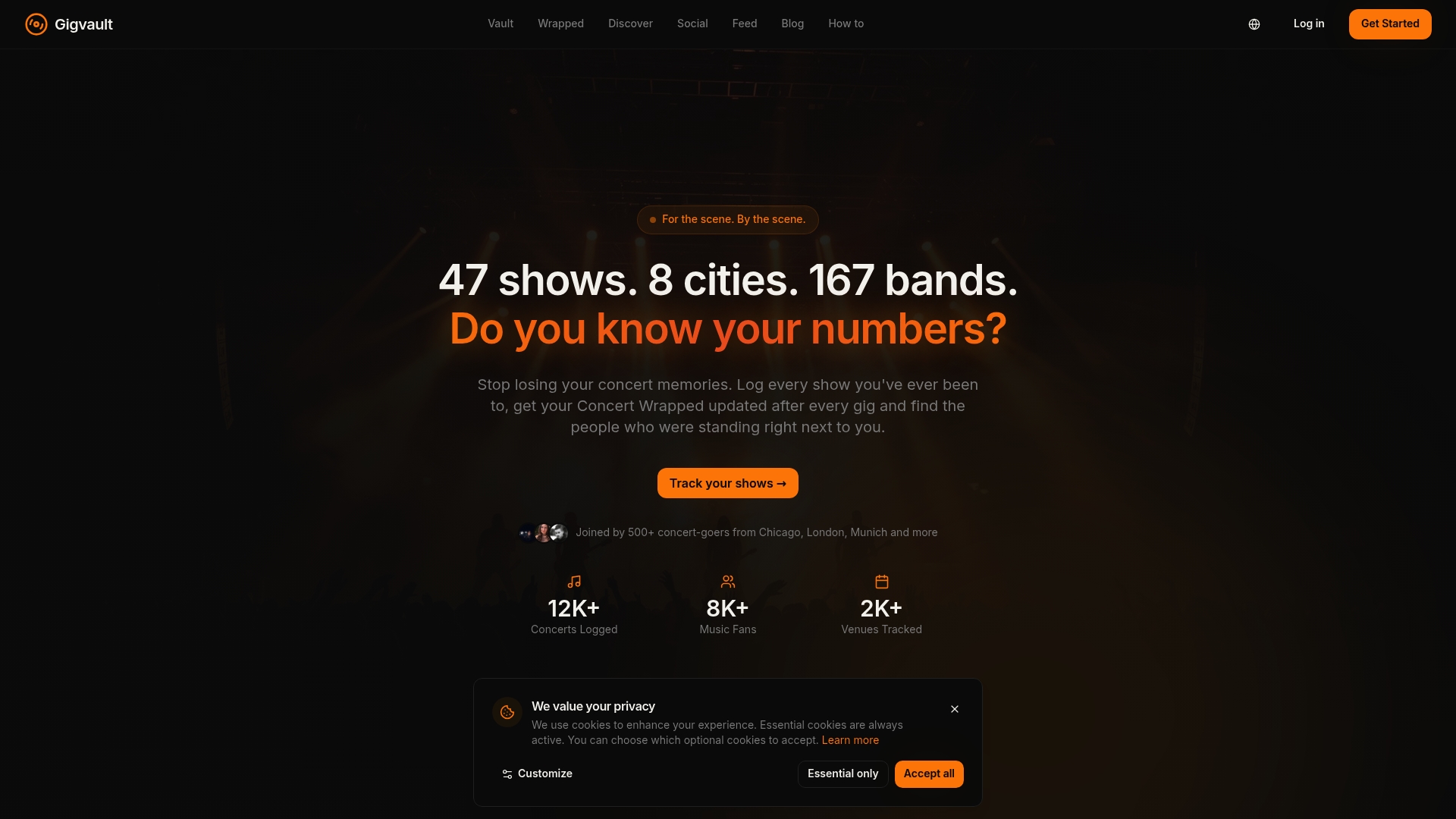
Gigvault bridges personal documentation and social engagement in one place. You can log every show, upload photos and videos, track your favorite artists and venues, and discover other fans who share your concert history. Features like AI-generated Music Identity, mutual connection discovery, and detailed stats turn your archive into something genuinely meaningful. Explore the full range of concert engagement features, start your concert diary, and use the setlist tracking tool to make every show count. Your concert history deserves more than a forgotten ticket stub.
Frequently asked questions
What counts as social engagement at a concert?
Social engagement includes both communal behaviors like synchronized movement and singing, and digital actions like sharing photos, videos, and setlists after the show.
How can I document my concert experiences effectively?
Use apps like Concert Archives, Setlist.fm, and Gigvault to log attendance, upload media, write notes, and follow friends for a richer, searchable digital history.
Are virtual and micro-events part of social engagement?
Yes. Virtual attendance and micro-events are recognized forms of engagement, with 69% of virtual attendees citing cost as their main reason and micro-events growing 23% in recent years.
Which social media platforms are best for concert engagement?
TikTok leads with a 3.70% engagement rate for music content, far ahead of Instagram at 0.48% and Facebook/X at 0.15%.
Is individual experience less valuable than community rituals?
Not at all. Academic research confirms that individual concert experiences are legitimate and fulfilling, especially when the energy of the crowd amplifies your personal emotional response.