TL;DR:
- Concert memories fade quickly without proper documentation, leading to lost details.
- Using dedicated apps and consistent logging helps preserve setlists, photos, and personal notes.
- Well-maintained logs reveal patterns, inform future choices, and deepen music fan self-awareness.
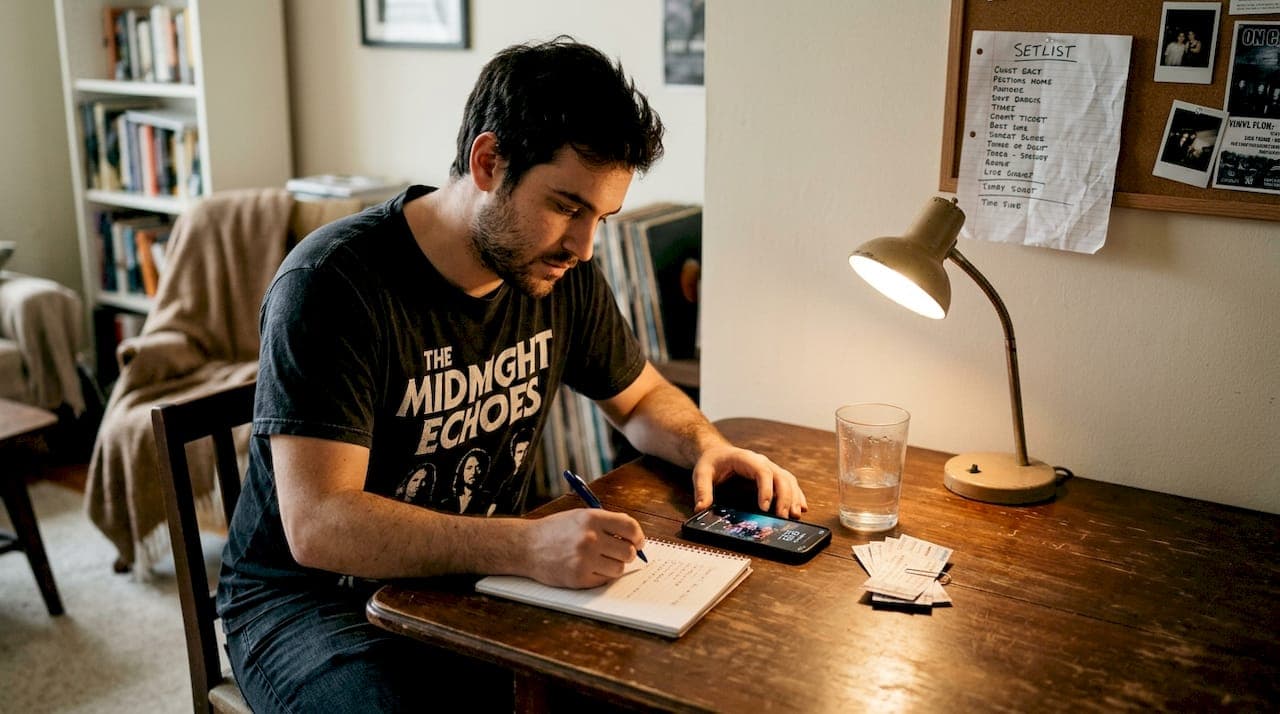
Most music fans are convinced they'll never forget the night their favorite band played that one song they never perform live. But concert memories fade faster than you'd think. The setlist blurs with the one from last spring. The venue name slips away. You remember the feeling, but not the facts. Avid concert-goers who log every show build a personal archive that keeps those facts alive, turning a season of shows into a living music diary. This guide walks you through why logging matters, which tools work best, and how to avoid the pitfalls that trip up even the most dedicated fans.
Table of Contents
- Why concert memories fade and the risks of forgetting
- The mechanics of logging concerts: Tools and platforms
- Edge cases, special scenarios, and common pitfalls
- Nuances and expert insights: Finding meaning in your concert log
- Our take: What most concert fans miss about logging
- Turn concert logging into a lasting community experience
- Frequently asked questions
Key Takeaways
| Point | Details |
|---|---|
| Memories fade quickly | Logging concerts prevents forgotten details and missing shows in your music history. |
| Tools make tracking easy | Apps like Gigvault and Setlist.fm allow you to record setlists, venues, and stats effortlessly. |
| Patterns guide future concerts | Your diary uncovers your favorite artists and venues to inform smarter ticket choices. |
| Balance recording and presence | Tracking should enhance your experience without distracting from truly live moments. |
Why concert memories fade and the risks of forgetting
You walk out of a venue buzzing. The encore is still ringing in your ears. You swear you'll remember every second. Then three months pass, and you can barely recall the opening act's name.
This isn't a character flaw. It's just how memory works. When experiences are emotionally similar, the brain starts to merge them. Two shows at the same venue, two festivals in the same summer, two tours by the same artist. They bleed together. The details that made each night unique start to disappear.
Here's what fans commonly forget without logging:
- The exact setlist and song order
- Which songs were surprises or rarities
- The opening act's name and whether they were worth seeing again
- The venue layout, sound quality, and sightlines
- Who you went with and what made the night special
- The city you were in if you traveled for the show
Those gaps matter more than you might expect. If you're trying to decide whether to catch an artist again, you want to know what their last show was actually like. If you're recommending a venue to a friend, you want real details, not a vague impression.
"The shows start to blur together. You remember the feeling, but the specifics vanish. That's exactly why keeping a record changes everything."
Consistent remembering concerts through logging gives you a concrete record to return to. It's the difference between a faded photograph and a sharp one. And the benefits of tracking concerts go beyond nostalgia. You build a complete live music history that reflects who you are as a fan, show by show, year by year.
Now that we've seen how easily memories can slip away, let's explore how logging concerts solves this problem.
The mechanics of logging concerts: Tools and platforms
Understanding why memories fade makes the need for logging clear. But how do you actually document each show? Let's break down the tools and methods.
The good news is that you have real options. Apps like Setlist.fm, Gigvault, and concert journals let you mark attended shows, add setlists, notes, photos, and ratings, and view your full profile with stats and comparisons over time.
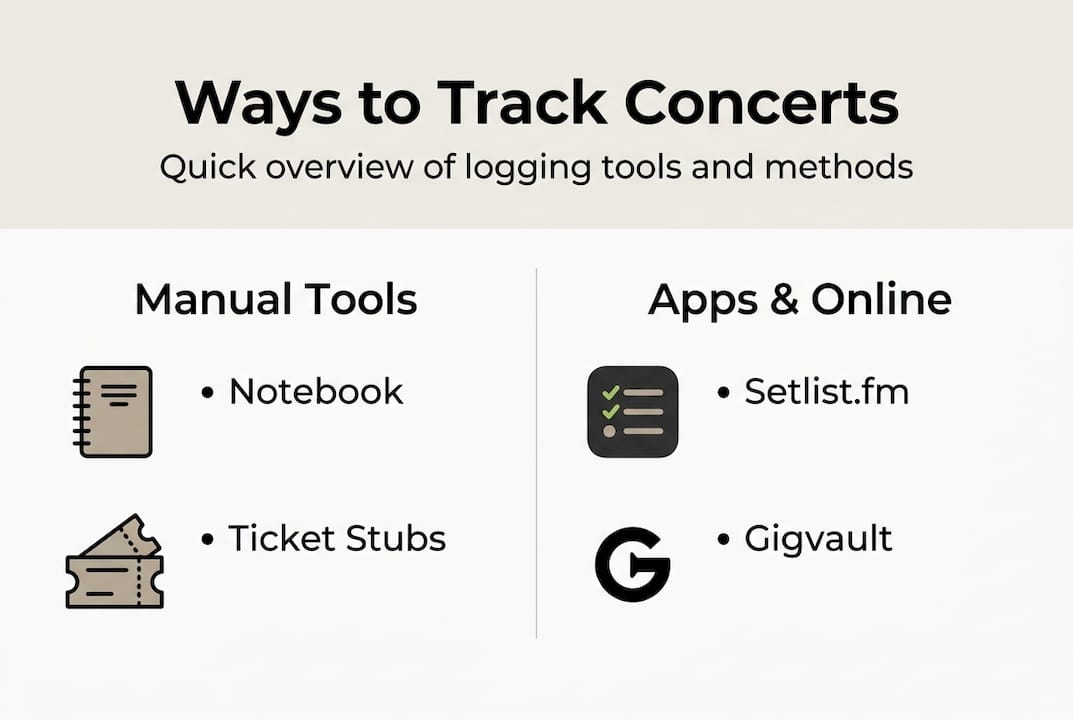
Here's a quick comparison of the most popular approaches:
| Method | Setlists | Photos/Media | Stats & Insights | Social Features | Offline Access |
|---|---|---|---|---|---|
| Gigvault | Yes | Yes | Yes (AI-powered) | Yes | No |
| Setlist.fm | Yes | No | Basic | Limited | No |
| Physical journal | Manual | No | None | None | Yes |
| Notes app | Manual | Yes (linked) | None | None | Yes |
Each method has its place. A physical journal is tactile and personal, great for capturing raw emotion right after a show. A notes app is quick and always in your pocket. But dedicated platforms give you something neither of those can: searchable history, visual stats, and a community of fans who share your taste.
Here's a simple process to start logging right away:
- Download your app of choice and create a profile before your next show.
- Log the basics immediately after the show: artist, venue, date, and city.
- Add the setlist using the app's database or by typing it in manually.
- Upload one or two photos to anchor the visual memory.
- Write a short note, even just two or three sentences about what stood out.
- Rate the show so you have a reference point for future decisions.
Pro Tip: Cross-reference your setlist with Setlist.fm's database right after the show. Fans often post setlists within minutes of the final song. This saves you from trying to remember song order two days later when it's already fuzzy.
Exploring best concert tracker apps gives you a deeper look at which platforms suit different logging styles. And if you want to understand what your data can actually tell you, live music tracking insights breaks down the analytics side in detail.
Edge cases, special scenarios, and common pitfalls
Now that you know which tools to use, it's important to tackle some of the trickier aspects of concert logging.
Not every show fits neatly into a single entry. Festivals, backfilling old shows, and multi-stage events all require a slightly different approach. Getting these right keeps your archive accurate and actually useful.
Backfilling past shows
Most fans don't start logging from their very first concert. If you're starting now, here's how to recover your history:
| Source | What you can recover | Reliability |
|---|---|---|
| Physical tickets | Date, venue, artist | High |
| Email confirmations | Date, venue, artist | High |
| Phone photos | Date (via metadata), vibe | Medium |
| Social media posts | Date, artist, sometimes setlist | Medium |
| Pure memory | Artist, rough year | Low |
Start with the highest-reliability sources and work backward. Don't try to rebuild everything at once. Pick a time period, like the last two years, and fill that in first. Then go further back when you feel like it.
Some apps like ConcertCritic include GPS-based attendance verification and tools for handling festival logging, where you might see five or six acts in a single day.
Festival logging tips:
- Log each set as a separate entry, not the festival as one show
- Note the stage and approximate time for each set
- Flag headliners separately so your stats reflect the full picture
- Use photos with timestamps to jog your memory for the order of sets
Pro Tip: Set a reminder on your phone for the morning after a festival. Logging while the details are fresh, even just artist names and one highlight per set, takes ten minutes and saves hours of guessing later.
Common pitfalls to avoid:
- Trying to backfill ten years of shows in one weekend leads to burnout fast
- Logging only headliners and skipping openers creates gaps in your history
- Forgetting to note the city when you travel for shows
For more on keeping your archive organized and useful, check out organizing concert archives and concert memory tips for practical strategies.
Nuances and expert insights: Finding meaning in your concert log
Beyond working with edge cases, concert logging reveals surprising layers of value that go far beyond simple record keeping.

When you log consistently, patterns emerge. You start to notice things you never would have caught otherwise. Maybe you've seen the same artist seven times but only at outdoor venues. Maybe you always end up at the same three cities. Maybe your highest-rated shows all share a common thread, like smaller venues or specific genres.
Consistent logging reveals your favorite venues and artists, informs future attendance decisions, and builds a genuine music identity that reflects your actual taste, not just what you think your taste is.
Here's what a well-maintained concert log can tell you:
- Which artists you return to most, and why
- Whether you prefer intimate clubs or massive arenas
- How your taste has shifted over the years
- Which cities have the best shows for your favorite genres
- How much you're actually spending on live music annually
That last one surprises a lot of people. Seeing your concert history laid out visually makes the investment feel real and intentional, not just a series of impulse ticket purchases.
"Logging isn't about documenting for others. It's about understanding yourself as a music fan."
Now, there's a fair counterargument worth addressing. Some fans and artists push back on the idea of documenting shows at all, arguing that phones and logging pull you out of the moment. And they're not wrong that staring at a screen during a set is a real problem.
But logging doesn't have to mean filming the whole show. It means spending five minutes after the encore to jot down what mattered. That's not distraction. That's intentional memory-keeping. The key is to be present during the show and reflective afterward. Those two things aren't in conflict.
Exploring concert habit insights shows how fans use their data to plan smarter and attend shows that genuinely excite them, rather than buying tickets out of habit.
Our take: What most concert fans miss about logging
Here's the thing most articles about concert logging get wrong. They treat it like a productivity hack. A way to optimize your music spending or keep a tidy database. That framing misses the point entirely.
Logging concerts is an act of self-discovery. When you look back at five years of shows, you're not reading a spreadsheet. You're reading your own story. The cities you traveled to. The friends who showed up again and again. The artists you grew with. The nights that changed something in you.
We've seen fans use their concert logs to reconnect with people they met at shows years ago. We've seen people realize they'd drifted from the music they actually love and use their history to find their way back. That's not productivity. That's meaning.
The concert logging benefits that matter most aren't the stats. They're the stories those stats point to. Start simple, stay consistent, and let your archive grow into something worth returning to.
Turn concert logging into a lasting community experience
If you're ready to make the most of your concert history, here's where to start.
Gigvault was built specifically for fans who want more than a ticketing receipt or a basic list. It's a place to log every show, upload your photos, track your favorite artists and venues, and see your full live music history come to life with personalized stats and insights.
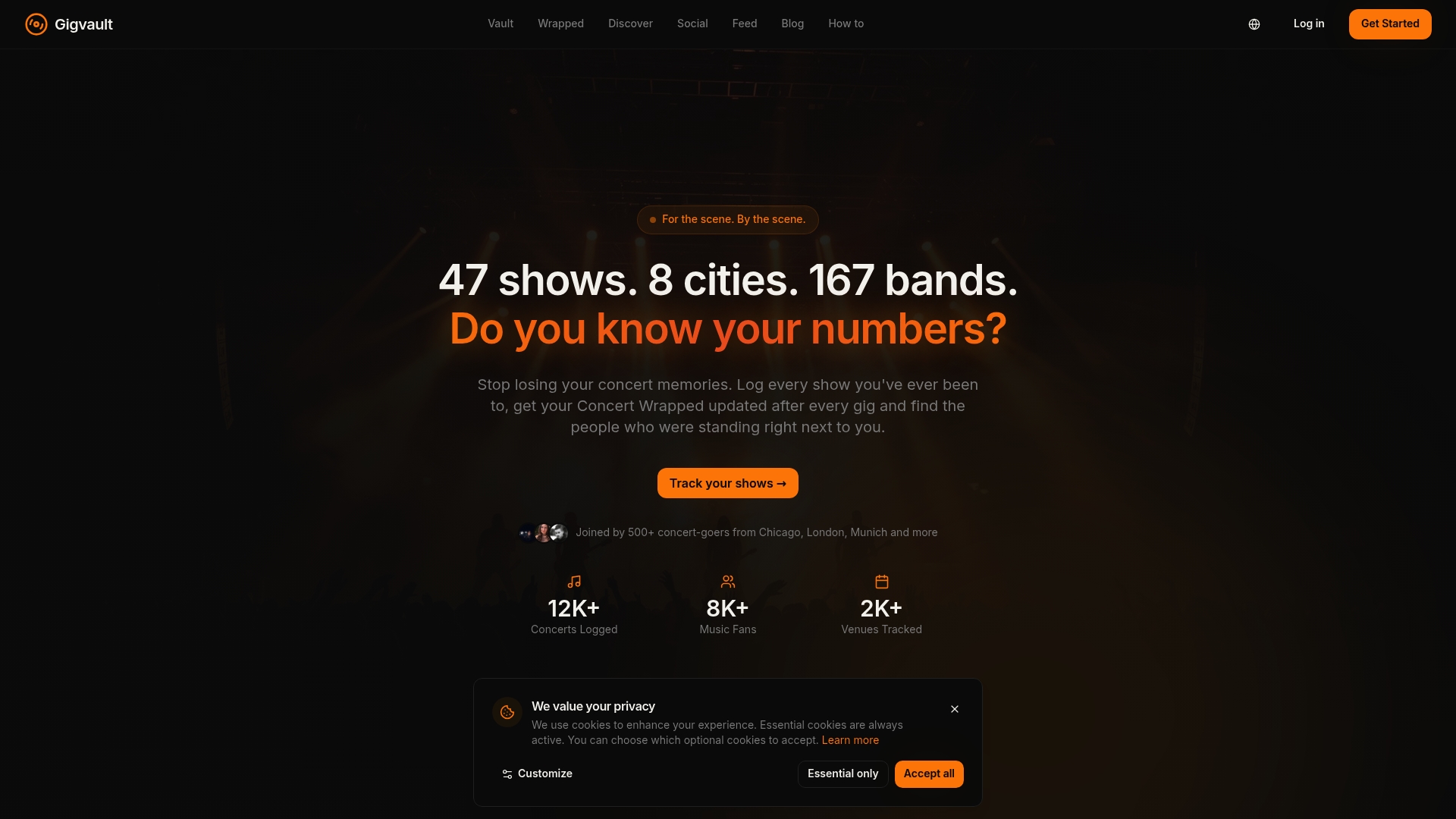
What makes it different is the community layer. You can discover other fans who've been to the same shows, connect over shared history, and plan future concerts together without the noise of follower counts or algorithmic feeds. Whether you're logging concerts in Berlin or tracking a decade of local shows, Gigvault's features give your memories a home they deserve. Start your archive today.
Frequently asked questions
What is the best app to log every concert?
Gigvault and Setlist.fm are among the top-rated apps for tracking concerts, with setlist logging, profile stats, and community features that make your history feel alive.
How do I log concerts from years ago?
Start with physical tickets, email confirmations, and phone photos, then backfill from memory for the rest. Focus on highlights and avoid trying to recover everything at once to prevent burnout.
Can logging concerts reveal patterns about my music tastes?
Yes. Consistent logging surfaces your most-visited venues, favorite artists, and even how your taste has shifted over time, helping you make smarter decisions about future shows.
What are common mistakes when tracking concerts?
The biggest mistake is trying to log too much too fast. Start with recent shows and backfill selectively, and use app integrations with setlist databases to keep your records accurate without extra effort.