
Most concert-goers walk away from shows with fading memories and a ticket stub buried in a drawer. But passionate fans who organize their concert archives discover something remarkable: those fleeting moments transform into a rich personal history that deepens connections with fellow music lovers and reveals patterns in their live music journey. This guide explores practical methods for building your own concert archive, tackles common data challenges, and shows how organized records unlock community bonds and personal insights that casual show attendance never could.
Table of Contents
- Key takeaways
- Why organizing concert archives transforms your live music experience
- Practical ways to organize your concert archive effectively
- Common challenges and nuanced solutions in concert archiving
- How organized concert archives deepen fan connections and empower discovery
- Explore Gigvault to track and enrich your concert archives
- FAQ
Key Takeaways
| Point | Details |
|---|---|
| Build personal archives | Organizing logs turn fleeting concerts into tangible histories that deepen community bonds and reveal patterns in your live music journey. |
| Start with memorable shows | Begin by logging your five most memorable concerts to establish an emotional foundation and sustain the habit. |
| Manual and digital tools | A mix of bullet journal entries and digital apps such as setlist.fm captures setlists and creates visual timelines. |
| Share to connect communities | Sharing organized histories online fosters community, sparks debates about variations, and helps discover new artists. |
Why organizing concert archives transforms your live music experience
Concerts exist in a beautiful contradiction. The energy, the crowd, the setlist surprises create magic that vanishes the moment the house lights come up. Yet fans who maintain detailed logs discover these ephemeral experiences become tangible histories that foster deeper community bonds and personal meaning.
Think about your favorite show from five years ago. You probably remember the headliner and maybe one standout moment. But what about the opener who blew you away? The friend who joined you last minute? The unexpected cover that made the whole venue lose it? Without organized records, these details slip away.
Archived concert logs preserve the texture of your live music journey:
- Specific setlist moments that defined your experience
- Names of friends who shared those memories with you
- Venue details that trigger location-based nostalgia
- Personal ratings that capture how you felt in that moment
- Notes about weather, crowd energy, or backstage encounters
These details matter because they transform passive attendance into active documentation. When you remember every concert through organized archives, you create a personal narrative that connects individual shows into a cohesive story about your relationship with live music.
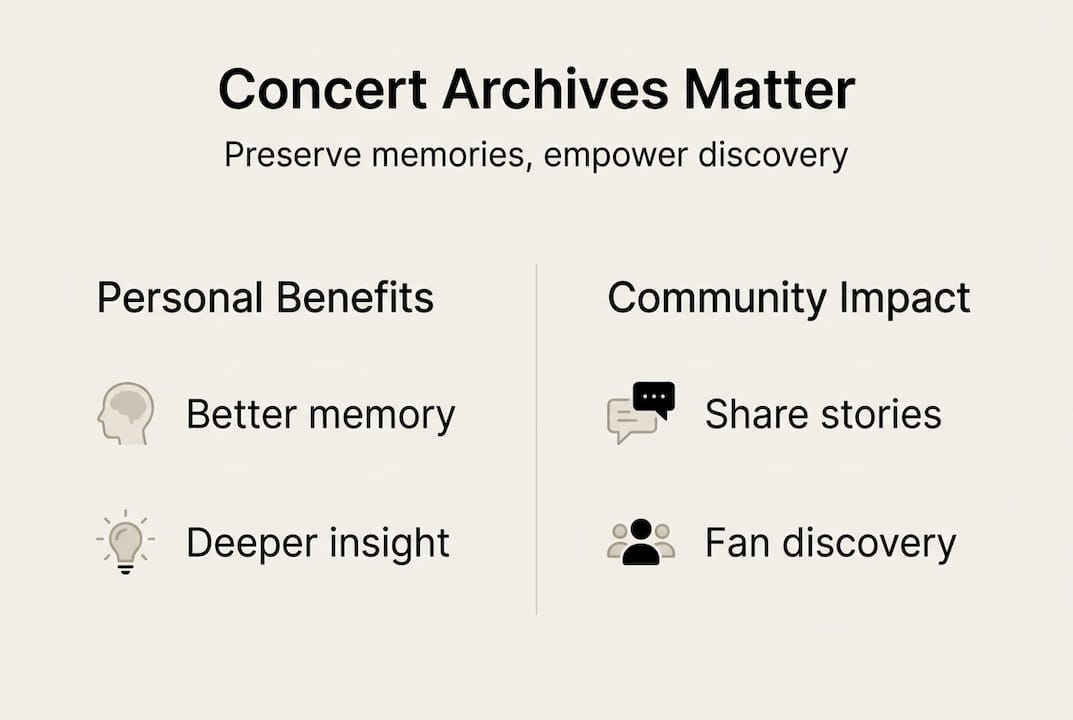
Pro Tip: Start your archive by logging your five most memorable concerts first. This creates an emotional foundation that motivates you to fill in the gaps and maintain the habit going forward.
Sharing these organized histories online connects you with communities who appreciate your journey. A detailed archive becomes a conversation starter, revealing overlapping show attendance with strangers who become friends. Someone across the country might have caught the same tour stop in a different city, sparking discussions about setlist variations and regional crowd differences.
The communal value extends beyond nostalgia. Organized archives help fellow fans discover new artists through your documented opener experiences. They validate shared memories when two people realize they stood in the same venue on the same night. They create bridges between generations when older fans share their historical concert logs with younger enthusiasts curious about legendary tours they missed.
Practical ways to organize your concert archive effectively
Starting a concert archive feels overwhelming when you're staring at years of shows. The key is choosing a method that matches your habits and then committing to consistent updates.
Bullet journal logs offer the simplest entry point. Create columns capturing essential data:
- Date of show
- Artist or band name
- Tour name if applicable
- Venue and city
- Names of people who attended with you
- Personal rating out of 10
- Standout moments or favorite songs
- Additional notes about the experience
This manual logging approach gives you complete control over format and fields. You can sketch stage layouts, paste ticket stubs, or add photos printed from your phone. The physical act of writing reinforces memories and creates a tangible artifact you can flip through during quiet moments.

Digital tools offer different advantages. Apps and platforms leveraging APIs from databases like Setlist.fm automatically populate setlists, saving you hours of manual entry. They generate visualizations showing your concert timeline, most-seen artists, and venue patterns. Some platforms even connect you with other users who attended the same shows.
Here's a step-by-step process for launching your digital archive:
- Research and select a platform that fits your needs for features, privacy, and community
- Gather existing documentation like ticket stubs, photos, or calendar entries to jog your memory
- Start with recent shows while details remain fresh, then work backward chronologically
- Input core data fields consistently: date, artist, venue, city, and attendees
- Add ratings and notes immediately after each new show to maintain accuracy
- Schedule monthly reviews to catch any missed entries and update incomplete records
The best apps to track concerts balance automation with customization. You want tools that reduce data entry burden without stripping away the personal details that make your archive uniquely yours.
| Method | Ease of setup | Feature richness | Customization | Portability |
|---|---|---|---|---|
| Bullet journal | High | Low | Complete | Medium |
| Spreadsheet | Medium | Medium | High | High |
| Dedicated app | Low | High | Medium | High |
| Custom database | Low | Highest | Complete | Medium |
Maintaining your archive requires discipline. Set a reminder to log new shows within 48 hours while memories stay vivid. This prevents backlog that feels insurmountable three months later when you can barely remember which opener played which venue.
Pro Tip: Create a simple rating system you'll use consistently. A 10-point scale works, but even a three-tier system (good, great, legendary) helps you quickly identify shows worth revisiting in your archive.
For fans following specific artists extensively, specialized tracking makes sense. Someone catching every Taylor Swift tour stop benefits from dedicated tracking approaches that capture setlist variations, surprise songs, and tour-specific moments. These focused archives become valuable resources for other fans planning future shows.
Explore digital concert archive tools that offer API integration and automated updates. These technical solutions suit fans comfortable with coding or willing to invest time in setup for long-term maintenance benefits.
Common challenges and nuanced solutions in concert archiving
Even meticulous fans encounter frustrating data issues that threaten archive accuracy. Understanding these challenges and their solutions prevents hours of cleanup work later.
The most common problems include:
- Artist name variations across different sources and databases
- Missing or conflicting setlist information from unofficial shows
- Live recording versions versus studio album track listings
- Compilation albums creating duplicate or confusing entries
- Venue name changes over time causing location confusion
These inconsistencies plague universal databases because they attempt to serve everyone. Your personal archive sidesteps many issues by focusing solely on your experience and preferences.
Manual data cleaning remains necessary for maintaining accuracy. When you spot an artist listed three different ways across your entries, standardize to one preferred format. This tedious work pays dividends when you generate statistics or search for specific shows later.
| Data issue | Typical cause | Solution approach | Prevention strategy |
|---|---|---|---|
| Artist name variants | Different spellings or stage names | Manual standardization to preferred format | Create style guide at archive start |
| Missing setlists | Unofficial shows or incomplete databases | Note highlights you remember personally | Log immediately after show |
| Track variations | Live versions differ from studio | Specify live arrangement in notes | Use consistent notation system |
| Venue confusion | Name changes or multiple locations | Research and document official names | Cross-reference with maps |
Fan-made chronologies offer better accuracy for niche or jam band artists than massive universal databases. A dedicated Phish fan maintaining their own setlist archive understands context and nuance that automated systems miss. These specialized resources become invaluable when you're trying to verify details from shows years past.
Pro Tip: Join online communities focused on artists you see frequently. These groups often maintain collaborative archives with verified setlists and show details that surpass what general databases offer.
When you encounter conflicting information, prioritize your own memory and documentation over external sources. Your archive exists to capture your experience, not to perfectly mirror some objective reality. If you remember a specific song being played but the official setlist disagrees, trust your recollection and note the discrepancy.
The differences between platforms like Gigvault and Concert Archives highlight how various approaches handle data challenges. Some prioritize comprehensive universal coverage while others emphasize personal customization and memory preservation.
Spotting frequent errors becomes easier with experience. Watch for:
- Duplicate entries from importing data multiple times
- Incorrect dates from timezone confusion or late-night shows
- Misspelled venue names that prevent location grouping
- Missing collaborator credits for festival sets or special guests
Address these issues during regular archive maintenance sessions. Schedule quarterly reviews where you scan for patterns and inconsistencies, fixing them in batches rather than letting problems accumulate.
How organized concert archives deepen fan connections and empower discovery
Beyond personal memory preservation, organized archives unlock insights about live music that casual attendance never reveals. The data patterns hidden in your concert history tell stories about your evolving taste and the artists who shaped your journey.
Archived setlists enable discovery of show uniqueness, streaming spikes following tours, and opener profiles that deserve wider attention. When you document which songs appeared at which shows, you can identify rare performances and tour-specific arrangements that make certain concerts more valuable in retrospect.
Concert attendance triggers measurable streaming boosts for both headliners and openers. Your organized archive helps you track this phenomenon personally. Did you start listening to that opener more after seeing them live? Your archive data confirms or challenges that assumption.
Archives facilitate music discovery through several mechanisms:
- Documented opener experiences remind you to explore those artists further
- Setlist analysis reveals deep cuts and covers worth adding to playlists
- Venue patterns show you which locations consistently book artists matching your taste
- Friend attendance records identify whose recommendations you should trust
- Tour date gaps suggest artists due for return visits to your region
These insights transform passive fandom into active participation. You stop simply attending shows and start curating a relationship with live music that reflects intentional choices and discovered patterns.
Sharing your archive strategically builds meaningful connections:
- Post annual concert recaps summarizing your year in live music with statistics and highlights
- Create comparison posts when you catch multiple tour stops, analyzing setlist evolution
- Reach out directly to fans whose archives overlap significantly with yours
- Contribute your documented experiences to artist-specific communities and forums
- Offer your archive as a resource when friends ask for concert recommendations
- Use shared show attendance as conversation starters at future concerts
The community impact of concert archives extends beyond individual connections. Collective documentation creates historical records of tours, venues, and scenes that might otherwise disappear. Your personal archive contributes to a larger cultural preservation effort when you share it thoughtfully.
Pro Tip: When you meet someone at a show, exchange archive links or usernames rather than just social media. This creates a music-specific connection that often proves more meaningful than generic friend requests.
Organized archives reveal surprising truths about your concert habits. You might discover you've seen certain artists far more often than you realized, or that specific venues consistently deliver your favorite experiences. These patterns inform future decisions about which shows to prioritize and which to skip.
The social engagement possibilities multiply when multiple fans maintain detailed archives. You can organize group outings based on mutual artists none of you have seen yet. You can plan trips to catch tours in different cities, comparing notes afterward about regional variations. You can create challenges or goals around expanding your collective concert footprint.
Archives also support personal reflection during different life stages. Looking back at shows from college versus your current phase reveals how your taste evolved. Seeing which friends appeared most frequently in your early archive versus recent entries maps relationship changes through the lens of shared musical experiences.
Explore Gigvault to track and enrich your concert archives
Building a comprehensive concert archive requires tools designed specifically for passionate fans who want more than basic show lists. Gigvault offers a dedicated platform where you can log every concert, upload photos and videos, and generate personalized insights about your live music history.
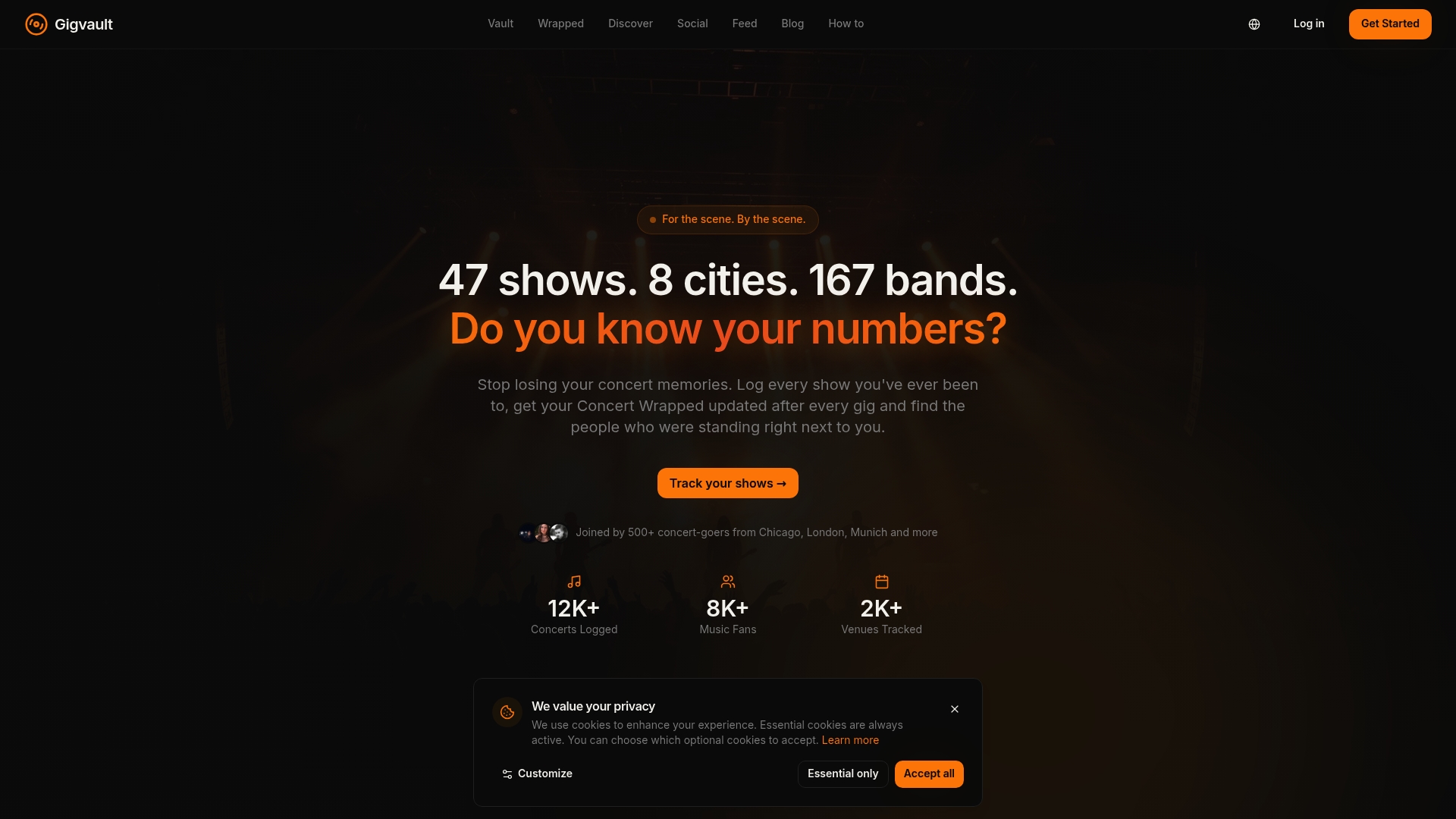
The platform connects you with a community that values sharing concert memories and discovering new music through archived experiences. Unlike generic social networks, Gigvault focuses exclusively on live music, creating meaningful interactions around shared show attendance and artist enthusiasm.
Track your favorite artists and receive dynamic updates with personalized insights like achievements, cities visited, and top venues. Annual concert wrapped features show you patterns and statistics that reveal your relationship with live music in surprising ways.
Explore specific artist pages like The Journey Back or In This Moment to see how other fans document their experiences and discover upcoming shows. The Gigvault platform transforms concert archiving from a solo project into a shared journey with fellow music enthusiasts who understand why every show matters.
FAQ
What is the best way to start organizing my concert archive?
Start with a simple log noting key details like date, artist, venue, and who attended with you, then expand with personal ratings and memorable moments. Choose between physical bullet journals for tactile satisfaction or digital apps for automated features and visualizations. Begin by documenting your five most memorable concerts to build momentum, then work backward chronologically through your concert history. The key is consistency: log each new show within 48 hours while details remain fresh.
How do I deal with inconsistent data like artist name variations in my archive?
Regularly review your archive and standardize artist names manually to your preferred format, creating a personal style guide for consistency. Use specialized tools or fan-created chronologies for accuracy on niche artists where universal databases struggle with variations. Schedule quarterly maintenance sessions to catch and fix inconsistencies before they multiply. The differences between platforms show how various tools handle data cleaning, helping you choose solutions that match your technical comfort level.
Can organizing concert archives affect my music discovery and community engagement?
Yes, archived setlists enable discovery of new artists through documented opener experiences and reveal patterns in your listening habits that guide future concert choices. Organized archives create natural conversation starters with fellow fans, revealing overlapping show attendance that builds friendships around shared musical experiences. Sharing and comparing archives invites meaningful dialogue about setlist variations, venue preferences, and tour memories. The community impact extends beyond individual connections, contributing to collective documentation of tours and scenes that preserves live music history.
How detailed should my concert archive entries be?
Include enough detail to trigger vivid memories years later: date, artist, venue, city, attendees, personal rating, and standout moments form the essential foundation. Add setlist highlights, weather conditions, crowd energy observations, or personal context that made the show special. Balance thoroughness with sustainability by creating a template you can complete in five minutes per show. Your archive should capture your unique perspective rather than attempting encyclopedic completeness, so prioritize details that matter personally over exhaustive documentation.
What are the advantages of digital concert archives over physical journals?
Digital tools offer automated setlist population, statistical visualizations, searchability, and cloud backup that physical journals cannot match. They enable easy sharing with other fans, integration with streaming services, and discovery of users who attended the same shows. However, physical journals provide tactile satisfaction, complete customization freedom, and independence from platform changes or shutdowns. Many passionate fans maintain hybrid systems, using digital tools for comprehensive logging while keeping physical journals for their most meaningful shows with photos, ticket stubs, and extended reflections.
Recommended
- How to Remember Every Concert You've Ever Been To | gigvault
- gigvault vs Concert Archives – Which App is Better in 2026?
- gigvault Blog – Live Music, Gig Tracking & More
- The 5 Best Apps to Track Concerts You've Been To (2025) | gigvault
- 8 Key Elements for Your Music Data Checklist - Blog - Music24.com