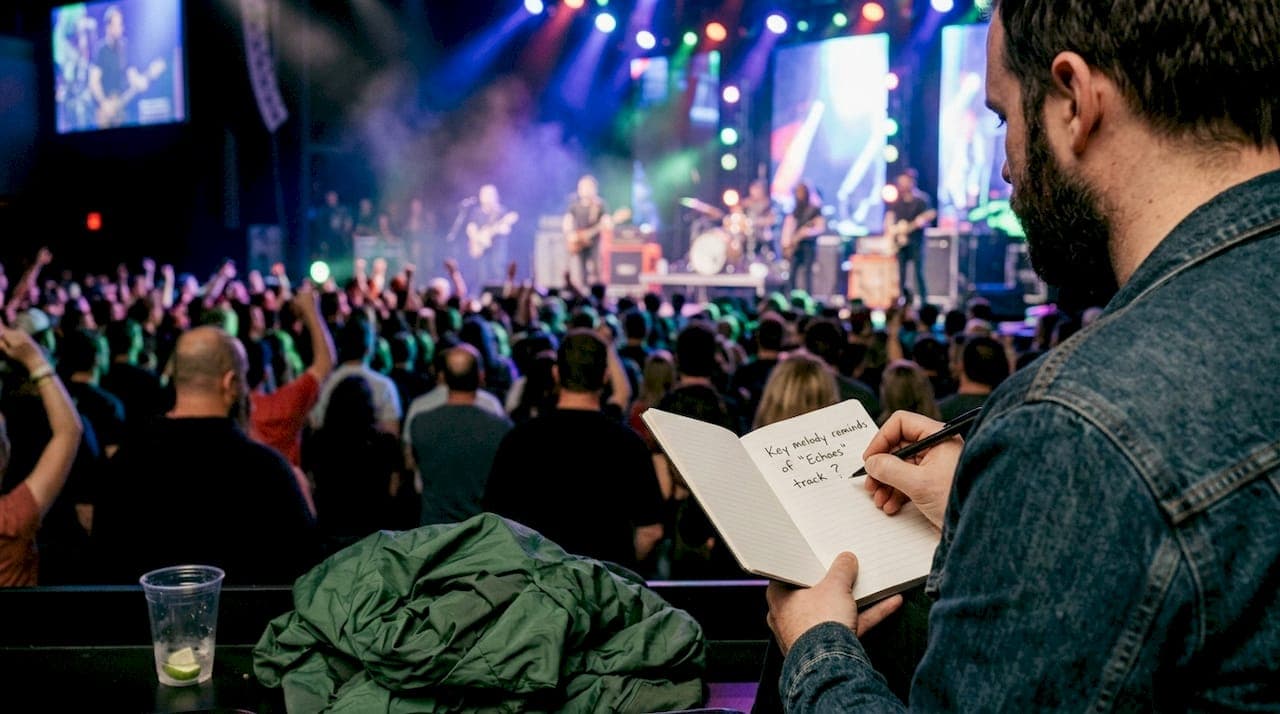
You just witnessed an incredible show, and the energy still pulses through you. You want to share this experience with fellow music lovers, not just post a blurry photo with a caption. Dedicated concert-goers crave meaningful ways to document and share their live music journeys, building personal archives while connecting with communities who appreciate detailed insights. This guide walks you through the tools, structures, and strategies needed to capture and share concert experiences that resonate, educate, and inspire other fans.
Table of Contents
- What You Need To Share Concert Insights Effectively
- Step-By-Step Guide To Capturing And Structuring Your Concert Insights
- Sharing Your Concert Insights To Reach And Grow Your Audience
- Validating And Refining Your Concert Insights With Data And Feedback
- Explore Gigvault To Track And Share Your Live Music Journey
- How To Share Concert Insights FAQ
Key takeaways
| Point | Details |
|---|---|
| Use specialized apps | Logging platforms like ConcertCritic and RAVR help you track, rate, and share concert experiences with structured formats |
| Structure your reviews | Follow a three-part format with introduction, body covering setlist and performance, and conclusion with recommendations |
| Leverage multiple platforms | Combine social media for quick shares with blogs for in-depth analysis to reach different audience segments |
| Track your impact | Use analytics and community feedback to refine your insights and reduce bias in future reviews |
| Build a personal archive | Maintain both private logs and public shares to create a comprehensive concert history while engaging your community |
What you need to share concert insights effectively
Before you start documenting concerts, you need the right toolkit. The foundation includes specialized apps designed for concert logging, social platforms for sharing, and basic equipment to capture moments. Understanding what tools serve which purposes helps you build a comprehensive system for both private archiving and public engagement.
Your primary tools should include concert tracking apps. ConcertCritic and RAVR offer logging, rating, and social sharing features specifically for live music experiences. These platforms verify attendance through GPS, provide structured review templates, and connect you with other concert-goers. For deeper insights, explore best apps to track concerts to find options matching your needs.
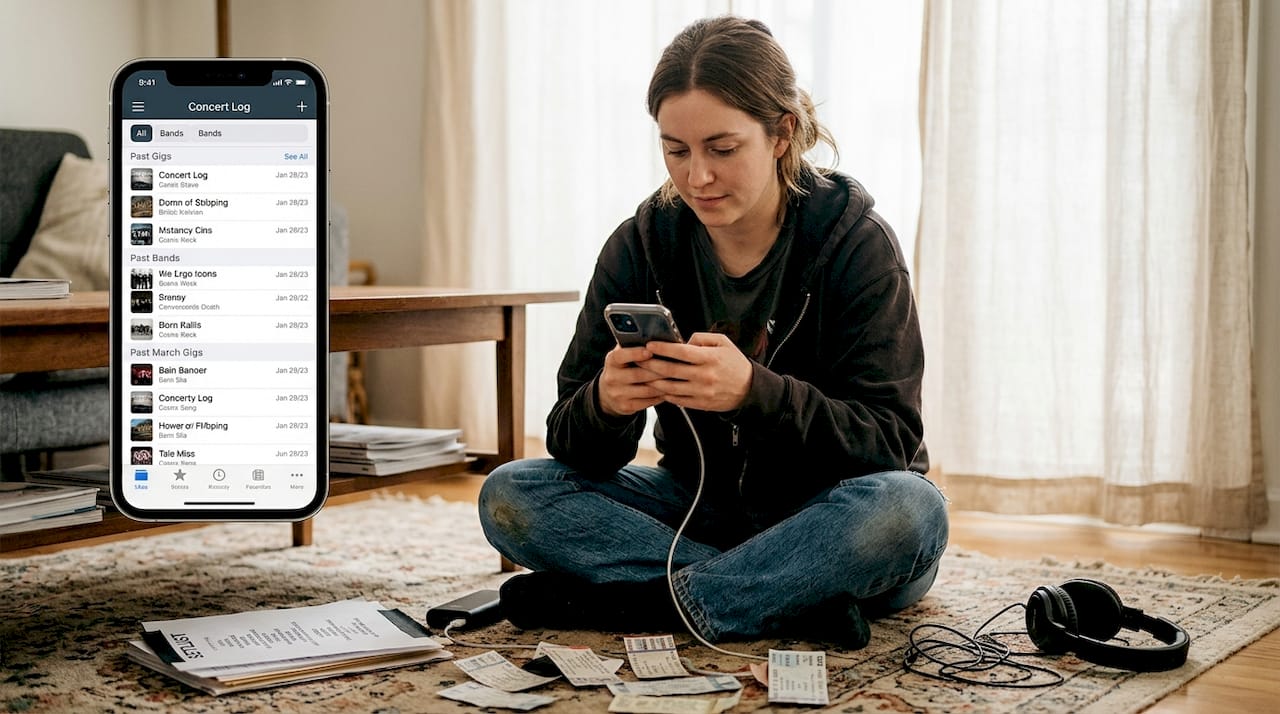
Your device setup matters too. A smartphone with a decent camera captures photos and short videos. Portable chargers keep your phone alive through multi-hour festivals. Internet access, either cellular or venue Wi-Fi, lets you share real-time updates. Cloud storage backs up your media automatically, protecting memories from device failures.
Knowledge prerequisites include understanding basic review structures and sharing etiquette. You should know how to balance objective observations with personal reactions. Familiarity with music terminology helps you describe performances accurately. Understanding platform-specific norms prevents awkward mistakes, like posting lengthy essays on Twitter or quick captions on your blog.
| App Feature | ConcertCritic | RAVR | Gigvault | Concert Archives |
|---|---|---|---|---|
| GPS Verification | Yes | Yes | No | No |
| Social Sharing | Yes | Yes | Yes | Limited |
| Rating System | 5-star | 10-point | Custom | Binary |
| Media Upload | Photos/Videos | Photos/Videos | Photos/Videos | Photos only |
| Community Features | Comments | Forums | Mutual Connections | None |
Your preparation checklist should include:
- Smartphone or camera with sufficient storage and battery life
- Concert tracking app installed and configured with your preferences
- Social media accounts optimized for music content sharing
- Basic knowledge of the artist, venue, and expected setlist
- Decision on sharing scope: private archive, close friends, or public audience
- Note-taking method for capturing impressions during or immediately after the show
Pro Tip: Combine a private logging app like Gigvault with public blog posts or social shares. This dual approach gives you a complete personal archive while building community engagement. Your private logs capture raw emotions and details you might not share publicly, while curated public posts showcase polished insights that educate and entertain your audience.
Deciding your sharing scope early shapes your documentation approach. Private logs let you be completely honest without worrying about artist or fan reactions. Public shares require more balanced perspectives and thoughtful language. Many superfans maintain both, using private notes as source material for refined public content. For memory techniques, check how to remember every concert for strategies that enhance both private and public documentation.
Step-by-step guide to capturing and structuring your concert insights
Creating compelling concert insights requires more than recounting what happened. You need a framework that captures atmosphere, performance quality, and personal impact while remaining accessible to readers who weren't there. The three-part structure provides this balance, guiding you through context-setting, detailed analysis, and meaningful conclusions.
Your introduction sets the stage. Include the artist name, venue, date, and why you attended this particular show. Mention special circumstances like album anniversary tours, surprise guests, or personal milestones. This context helps readers understand your perspective and expectations. A strong opening might note, "Seeing Paramore at Madison Square Garden on their 20th anniversary tour felt like witnessing music history, especially after following them since 2007."
The body delivers your substantive analysis. Structure concert reviews with sections covering setlist highlights, performance quality, audience energy, and venue characteristics. Describe specific songs that stood out, noting why they resonated. Evaluate the artist's stage presence, musicianship, and audience interaction. Capture the crowd's vibe, from sing-alongs to mosh pits. Assess venue acoustics, sightlines, and overall atmosphere.
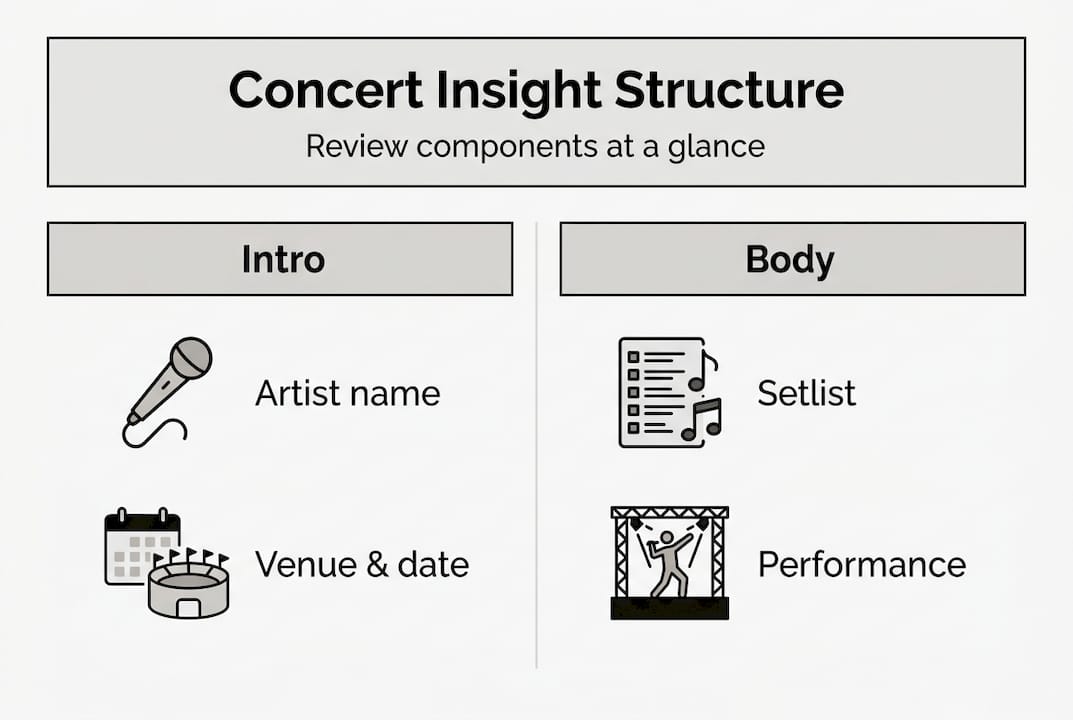
Your conclusion ties everything together. Offer a final verdict on whether the show met expectations. Provide recommendations for who would enjoy this artist live. Share key takeaways that might influence readers' future concert choices. End with a memorable observation that encapsulates the experience's essence.
Follow these steps to write vivid, balanced reviews:
- Take notes during or immediately after the show while memories stay fresh and emotions run high
- Organize observations into the three-part structure before writing full sentences
- Lead each section with your strongest, most compelling point to hook readers immediately
- Use sensory details describing sounds, visuals, and physical sensations to transport readers to the venue
- Balance subjective reactions with objective observations about technical performance quality
- Include specific examples like memorable song moments, crowd interactions, or unexpected surprises
- Edit for clarity and conciseness, cutting filler words that dilute your message
- Proofread for factual accuracy, checking setlist details and artist names against official sources
- Add relevant photos or video clips that illustrate key points without overwhelming the text
- Publish within 24 hours while the show remains culturally relevant and fresh in collective memory
Pro Tip: Use the 4P narrative framework to structure engaging reviews. Picture paints the scene with vivid details. Promise tells readers what they'll learn or feel. Prove delivers on that promise with specific examples and analysis. Push encourages action, whether attending future shows or exploring the artist's catalog. This framework works across platforms, from quick social posts to lengthy blog essays.
For additional guidance on structuring insights, explore the concert review structure guide and concert insight how-to guide. These resources provide templates and examples that accelerate your review-writing process while maintaining quality.
Timing matters significantly. Publishing within 24 hours captures peak interest when fans search for reactions and reviews. Social media algorithms favor timely content, boosting your visibility. Waiting too long means competing with dozens of other reviews as the cultural moment passes. Set aside time immediately after concerts to draft your initial thoughts, then polish and publish quickly.
Sharing your concert insights to reach and grow your audience
Creating great content means nothing if nobody sees it. Strategic sharing across multiple platforms amplifies your reach, connecting you with diverse audiences who consume content differently. Understanding each platform's strengths helps you tailor content for maximum impact while maintaining your authentic voice.
Your platform options include:
- Instagram for visual storytelling with photos, short videos, and Stories capturing real-time moments
- Twitter for quick reactions, setlist updates, and engaging in live conversations with other attendees
- YouTube for longer video content including full song recordings, venue tours, and detailed verbal reviews
- Personal blogs for in-depth written analysis with photos, allowing unlimited length and creative formatting
- TikTok for creative short-form video content reaching younger audiences through trending sounds and formats
- Reddit music communities for discussion-focused sharing where detailed insights spark conversations
| Sharing Method | Content Depth | Audience Size | Publishing Speed | Community Interaction |
|---|---|---|---|---|
| Social Media | Low to Medium | Large | Immediate | High |
| Personal Blog | High | Medium | Hours to Days | Medium |
| Specialized Apps | Medium | Niche | Minutes | Very High |
| Video Platforms | Medium to High | Large | Hours | Medium |
Effective promotion requires more than posting and hoping. Use relevant hashtags like the artist name, venue, tour name, and genre tags to help fans discover your content. Engage with fan communities on Reddit, Discord, or Facebook groups where members actively seek concert experiences. Tag the artist and venue in social posts, potentially earning shares that expose your content to thousands of followers.
Real-time social shares during shows generate immediate engagement. Publishing platforms for concert insights show that 45% of concert-goers share content during or immediately after shows. Quick Instagram Stories or tweets capture raw excitement, while polished blog posts published the next day provide depth. This layered approach serves different audience needs, from those seeking instant reactions to readers wanting thorough analysis.
Balance quick visuals with thorough analysis based on platform characteristics. Instagram demands striking photos with concise captions. Twitter rewards witty observations and real-time updates. Blogs accommodate lengthy essays with multiple photos and embedded videos. YouTube viewers expect substantial content, typically 5-15 minutes of edited footage with commentary. Tailor your content format to each platform's norms rather than cross-posting identical content everywhere.
For platform comparisons, review gigvault vs Concert Archives comparison to understand how specialized apps differ from general social media. Festival-goers should explore best festival tracker apps for tools optimized for multi-day events with complex schedules.
Cross-promotion amplifies reach significantly. Share your blog post link on social media. Embed Instagram photos in blog posts. Create YouTube videos discussing points from written reviews. Link your specialized app profiles in social media bios. This interconnected approach guides audiences across platforms, building a cohesive online presence that showcases your concert expertise.
Consistency matters more than frequency. Posting after every show builds audience expectations and establishes you as a reliable source. Irregular posting confuses followers and reduces algorithmic visibility. Set realistic goals based on your concert attendance, whether that's weekly posts during touring season or monthly recaps during slower periods.
Validating and refining your concert insights with data and feedback
Sharing insights marks the beginning, not the end. Analyzing how audiences respond and what metrics reveal helps you improve future content, reduce biases, and build authority as a trusted voice in the concert community. Data-driven refinement transforms casual sharing into strategic content creation.
Track these essential metrics:
- Sentiment analysis of comments and reactions showing whether audiences find your insights helpful or controversial
- Engagement rates including likes, shares, comments, and saves indicating content resonance
- Review reach measuring how many people view your content across platforms
- Community responses including questions, disagreements, and additional perspectives from other attendees
- Traffic sources revealing which platforms drive the most readers to your long-form content
- Follower growth showing whether your insights attract new audience members over time
Interpreting feedback requires objectivity. Positive reactions validate your approach, but don't ignore constructive criticism. If multiple readers question a factual claim, double-check your sources. When audiences consistently engage more with certain content types, create more of that format. Negative feedback about bias signals a need for more balanced perspectives.
Structured templates and GPS verification create authentic reviews that audiences trust. Concert-goers value verified attendance over second-hand accounts, and systematic approaches to reviewing reduce personal bias while maintaining unique perspectives.
Data analytics for concert reviews enhance future insights by revealing patterns in your content performance. Real-time metrics show which posts generate immediate buzz. Long-term analytics identify evergreen content that continues attracting readers months later. Sentiment tracking across multiple reviews helps you understand your writing's emotional impact.
Building a benchmark personal database transforms scattered insights into valuable reference material. Superfans attending an average of 6 concerts per year accumulate substantial data over time. Compare your ratings across artists, venues, and genres to identify patterns. Notice whether certain venues consistently deliver better experiences. Track which artists improve or decline over multiple tours. This personal database becomes a trusted resource for friends seeking concert recommendations.
Engaging with your audience enriches perspectives and builds community. Respond to comments thoughtfully, acknowledging different viewpoints. Ask questions that encourage deeper discussion. Share other attendees' photos or perspectives when they add value. This dialogue transforms one-way broadcasting into genuine community building, where multiple voices collectively capture an event's full impact.
For continuous improvement, revisit best apps to track concerts periodically as new platforms emerge with enhanced features. Technology evolves rapidly, and tools offering superior analytics or community features can elevate your insight-sharing practice.
Bias reduction requires conscious effort. Separate factual observations from personal preferences. Acknowledge when your mood, venue location, or previous experiences with an artist color your perception. Compare your impressions with other reviews to identify blind spots. Over time, this self-awareness produces more balanced, credible insights that serve diverse audiences.
Explore gigvault to track and share your live music journey
You've learned the strategies for capturing and sharing concert insights effectively. Now you need a platform that integrates these practices seamlessly. Gigvault offers dedicated concert-goers a comprehensive solution for tracking shows, building personal archives, and connecting with fellow music enthusiasts who share your passion.
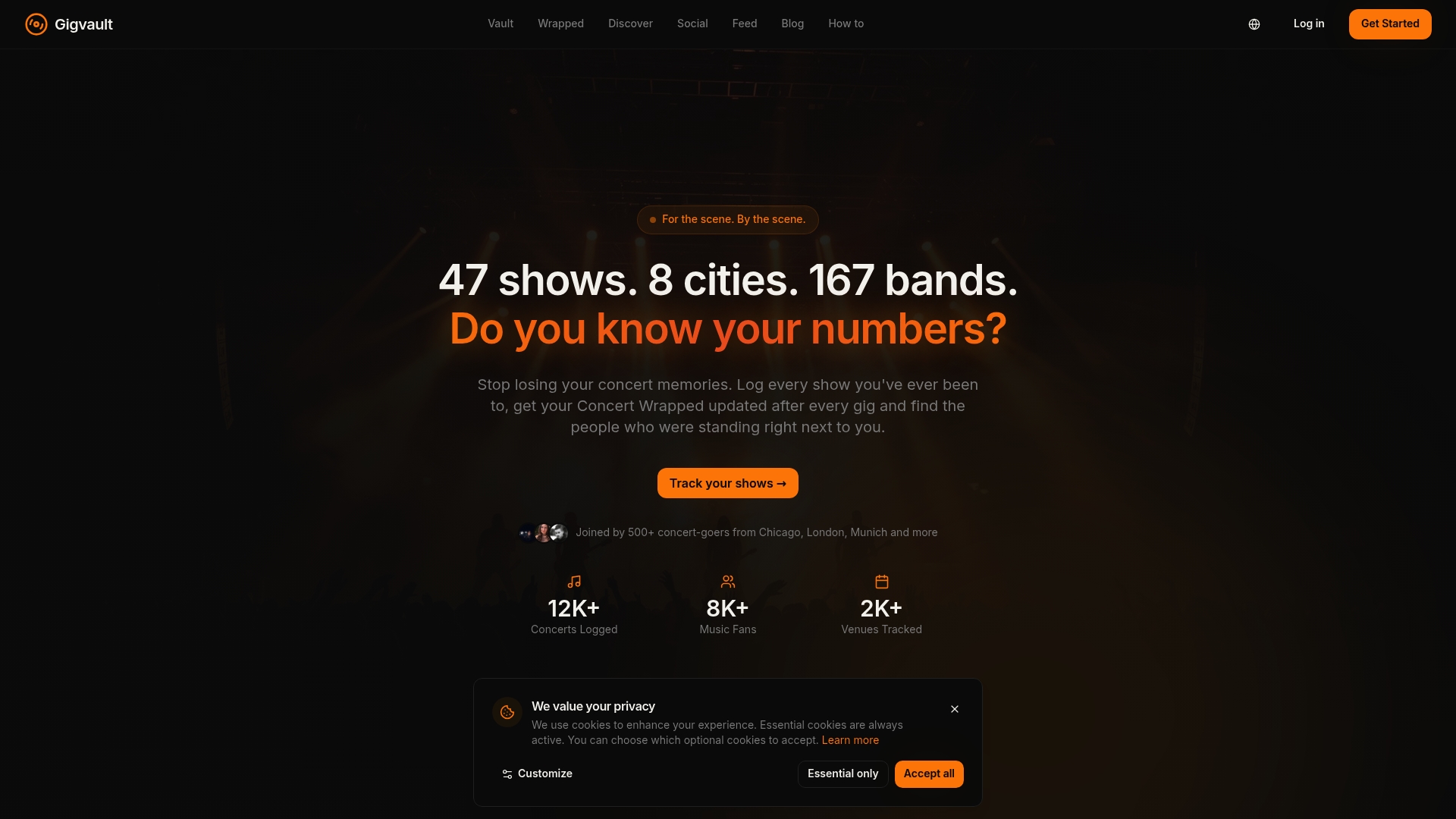
Gigvault lets you log every concert you attend, upload photos and videos, and track your favorite artists like Set It Off across multiple shows. The platform generates detailed statistics and year-end summaries through Concert Wrapped 2026, revealing patterns in your concert history. Unlike generic social media, Gigvault focuses specifically on live music memories, creating a private digital scrapbook that grows more valuable with each show you document.
Discover mutual connections based on shared concert histories. Plan future shows with friends using built-in coordination tools. Access AI-generated insights about your music identity. Join a community of superfans who appreciate detailed documentation and meaningful engagement around live music. Start building your concert legacy today at gigvault and transform how you preserve and share your live music experiences.
How to share concert insights FAQ
What are the best apps to log and share concert experiences?
ConcertCritic and RAVR lead specialized concert logging apps with GPS verification, structured review templates, and social sharing features. Gigvault excels at personal archiving with mutual connection discovery and detailed statistics. Choose based on whether you prioritize public sharing, private documentation, or community features. Many superfans use multiple apps, maintaining private logs while sharing curated insights publicly.
How soon should I publish my concert review for maximum relevance?
Publish within 24 hours while the show remains culturally relevant and fresh in collective memory. Social media algorithms favor timely content, and fans actively search for reactions immediately after shows. Draft initial thoughts right after the concert, then polish and publish the next day. Waiting longer means competing with dozens of other reviews as interest wanes.
What is the ideal structure for a concert insight post?
Use a three-part format: introduction with context and expectations, body covering setlist highlights and performance analysis, and conclusion with recommendations and key takeaways. Include specific examples, sensory details, and balanced perspectives mixing objective observations with personal reactions. Tailor length to platform, from quick social posts to in-depth blog essays exceeding 1,000 words.
Can I share concert footage safely on social media?
Short clips typically fall under fair use, but policies vary by platform and artist. Instagram and TikTok generally allow brief song snippets. YouTube's Content ID system may flag or monetize longer videos. Always credit the artist, avoid full song recordings, and respect venue photography policies. Some artists encourage sharing while others prohibit recording entirely, so check tour-specific rules before filming.
How do I avoid bias when reviewing concerts?
Separate factual observations from personal preferences explicitly. Acknowledge factors influencing your experience like venue location, mood, or previous artist exposure. Compare your impressions with other attendees' reviews to identify blind spots. Use structured templates ensuring you address multiple aspects systematically. Over time, self-awareness and practice produce more balanced, credible insights that serve diverse audiences. Visit the concert insight sharing guide for additional bias reduction techniques.