
TL;DR:
- Live music archives preserve recordings, setlists, photos, and memorabilia from concerts.
- Both fan-driven and institutional archives play roles in documenting and preserving music history.
- Building, sharing, and protecting your archive creates lasting personal and community connections.
Somewhere out there, a recording of your favorite band's most raw, electric performance exists in someone's hard drive, carefully tagged with the venue, date, and setlist. Live music archives are massive, living collections built by fans and institutions alike, holding millions of setlists, recordings, ticket stubs, and photos. The ARChive of Contemporary Music alone holds over 5 million items. Whether you've been to three shows or three hundred, understanding how these archives work can completely change the way you document, share, and relive your own concert story.
Table of Contents
- What are live music archives?
- Fan-driven versus institutional live music archives
- How live music archives work: Building, preserving, and sharing
- Community, connection, and the role of sharing
- Challenges and ethics: Copyright, quality, and safeguarding your archive
- Why live music archives matter more than ever
- Start your own concert archive journey
- Frequently asked questions
Key Takeaways
| Point | Details |
|---|---|
| Live music archives explained | They capture setlists, audio, photos, and more—preserving your unique concert history for years to come. |
| Fan and institutional approaches | Both user-driven platforms and formal archives shape a living record of live music’s legacy. |
| Technical and ethical best practices | Always get artist consent, use lossless formats, and keep multiple backups to protect your digital legacy. |
| Community connection | Sharing your archive supports discovery and friendships in the global music scene. |
What are live music archives?
A live music archive is exactly what it sounds like: a curated collection of materials from live performances. But the scope goes way beyond a folder of blurry stage photos. Live music archives are collections of recordings, setlists, photos, and memorabilia built to preserve concert history for fans and future generations.
Think about what gets lost when a show ends. The energy, the surprise song, the moment the crowd went completely silent. Archives exist to capture all of that. Common items you'll find inside one include:
- Setlists (handwritten or digital, sometimes the actual paper from the stage)
- Audio and video recordings from audience mics or soundboard feeds
- Ticket stubs and laminates from specific tours
- Concert photos ranging from professional shots to fan-captured moments
- Memorabilia like tour programs, posters, and backstage passes
For music history, these collections are irreplaceable. A 1962 Bob Dylan recording from a small Montreal club captures a version of an artist that no studio album ever could. That's the magic of live archives.
For fans, the value is just as personal. When you organize concert archives around your own show history, you're building a timeline of your life told through music. The tracking concerts benefits go well beyond nostalgia. They connect you to a community of people who were in the same room, feeling the same thing.
Fan-driven versus institutional live music archives
Not all archives are built the same way. There are two main types, and both play a vital role in preserving live music culture.
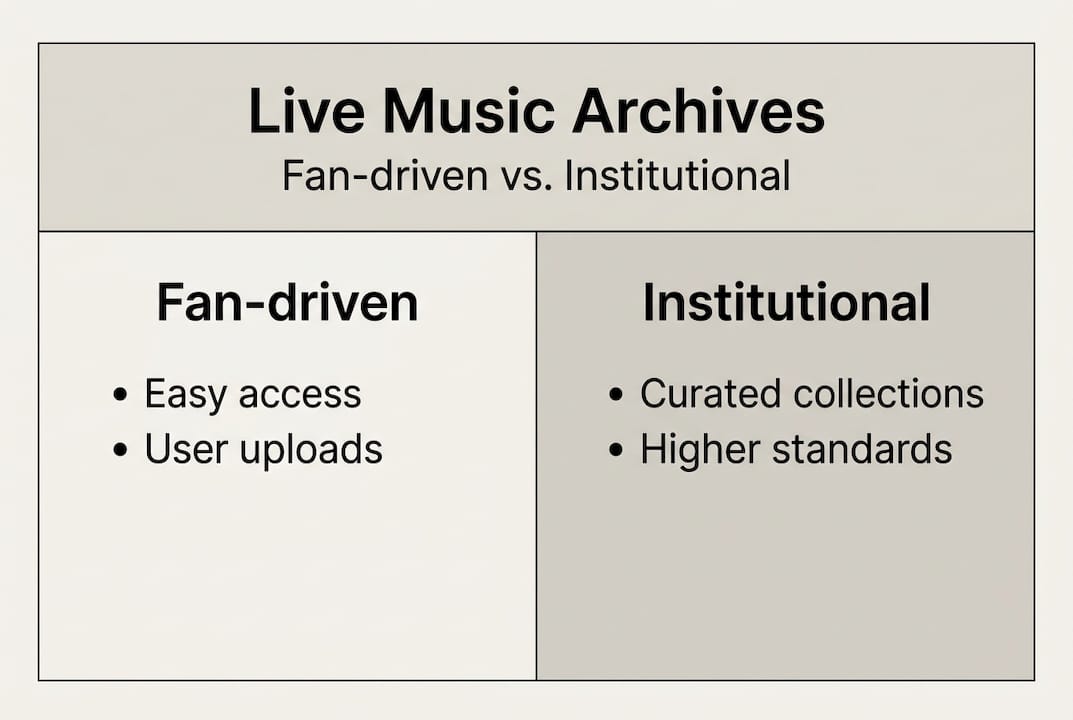
Fan-driven archives are built from the ground up by passionate concertgoers. Platforms like Setlist.fm, Concert Archives, and the Etree trading community let fans log shows, upload media, and generate personal stats. Fan-driven platforms like Setlist.fm and Concert Archives allow users to log shows, upload media, and generate stats, fostering community around shared concert experiences.

Institutional archives like the ARChive of Contemporary Music and Archive.org take a more formal approach. They focus on curation, long-term preservation, and public access. The Etree trading guidelines offer a great example of how community-based trading can still operate with structure and ethics.
Here's a quick comparison to help you see the difference:
| Feature | Fan-driven | Institutional |
|---|---|---|
| Submission process | Open, user-submitted | Curated, reviewed |
| Scale | Millions of user entries | Thousands of verified items |
| Curation level | Community-moderated | Expert-reviewed |
| Access | Free, often open | Varies, sometimes restricted |
| Focus | Personal stats, community | Preservation, research |
Both types matter. Fan platforms give you the personal diary feel, while institutions ensure the most historically significant recordings survive long-term. If you're curious about alternatives to specific platforms, check out these concert vault alternatives that might fit your archiving style better. You can also learn more about how to document concert experiences in a way that works for you.
How live music archives work: Building, preserving, and sharing
Building an archive sounds intimidating, but the process breaks down into clear steps. Here's how it typically works:
- Record the show using either an audience mic setup or a soundboard feed (more on that below)
- Digitize your recordings if they exist on tape or older formats
- Tag your files with accurate metadata: artist, venue, city, date, and setlist order
- Store in lossless formats like WAV or FLAC to preserve audio quality
- Back everything up using the 3-2-1 rule: three copies, two different storage types, one offsite
- Share with the community on appropriate platforms with the artist's consent
The mechanics of live recording include audience and soundboard sources, digitization formats like WAV and FLAC, metadata tagging, and the 3-2-1 backup method for protecting your files.
Here's how the two main recording types compare:
| Type | Sound quality | Crowd feel | Availability |
|---|---|---|---|
| Soundboard | High clarity | Low ambiance | Rare, needs access |
| Audience | Variable | High energy | Common, DIY |
For audience recording techniques, placement and mic quality make a huge difference. A good taper (someone who records shows) can capture something that sounds remarkably close to being there.
Pro Tip: Always get the artist's consent before recording or sharing. Many artists and trading communities have clear rules. When in doubt, check before you upload. And always log every concert with accurate details so your archive stays organized and searchable.
Community, connection, and the role of sharing
An archive locked on a hard drive is just storage. The real magic happens when you share it. Platforms like Setlist.fm and Concert Archives foster sharing of setlists and stats within global fan communities, turning individual memories into a collective record.
Sharing your archive does a few powerful things:
- Fills gaps in the community record, especially for smaller or regional shows
- Sparks connections with fans who attended the same shows
- Fuels music discovery when someone finds a recording of a band they've never heard
- Validates your experience, because someone else saying "I was there too" hits differently
- Builds your reputation as a trusted contributor in niche fan communities
The Concert Archives platform is a great example of how a dedicated app can make this sharing feel effortless and rewarding.
For deeper concert tracking and community benefits, the social side of archiving is often what keeps fans coming back. You stop being a passive listener and start being an active contributor to music history.
Pro Tip: Use your platform's privacy controls to decide what's public and what's just for you. Not every memory needs to be shared, and that's completely fine.
Challenges and ethics: Copyright, quality, and safeguarding your archive
Archiving live music isn't without its complications. Three big challenges come up again and again: copyright, quality, and data loss.
Copyright is the most serious. Artist consent is required for recording and sharing under copyright law. Some artists actively encourage taping sections at shows. Others prohibit it entirely. Always check before you record, and never upload something commercially without explicit permission.
Here are the key ethical guidelines to follow:
- Never sell recordings without authorization
- Respect "no taping" policies at venues and shows
- Credit the original taper when sharing someone else's recording
- Follow community trading rules, especially on platforms like Etree
Quality is another real issue. Audience recordings can range from crystal clear to barely audible. Managing expectations matters here. A recording that captures the energy of a wild crowd might be more valuable to you emotionally than a clean soundboard mix.
Data loss is the silent threat. Hard drives fail. Cloud services shut down. The best way to protect your archive is the 3-2-1 backup method. Cloud storage best practices for concert footage include using multiple platforms and keeping at least one local backup.
For context on how music venues shaped live music history, understanding the spaces where these recordings were made adds another layer of meaning to your archive.
Why live music archives matter more than ever
Here's something most fans don't realize until years later: the archive you build today becomes priceless tomorrow. Not financially, but personally. The setlist from that Tuesday night show in a 300-capacity venue, the photo of the crowd during the encore, the note you wrote about how the bass felt in your chest. That stuff doesn't exist anywhere else.
We think most fans underestimate how meaningful these collections become over a lifetime. The act of documenting is just as important as the content itself. It creates a bridge between who you were at that show and who you are now. It connects you to artists whose careers you've watched grow, and to strangers who became friends over a shared memory.
What makes live archives different from static collections is that they stay alive. Fans increasingly use personal concert logs and lossless sharing to connect authentically with other music lovers. When someone adds a setlist, corrects a song title, or uploads a photo from the same night, the archive grows. It breathes.
In the digital age, you have more tools than ever to build something genuinely meaningful. The question isn't whether your concert memories are worth preserving. They absolutely are. The question is whether you'll start before the details fade. Enriching your music journey through thoughtful archiving is one of the most rewarding things a dedicated fan can do.
Start your own concert archive journey
You've got the knowledge. Now it's time to put it to work.
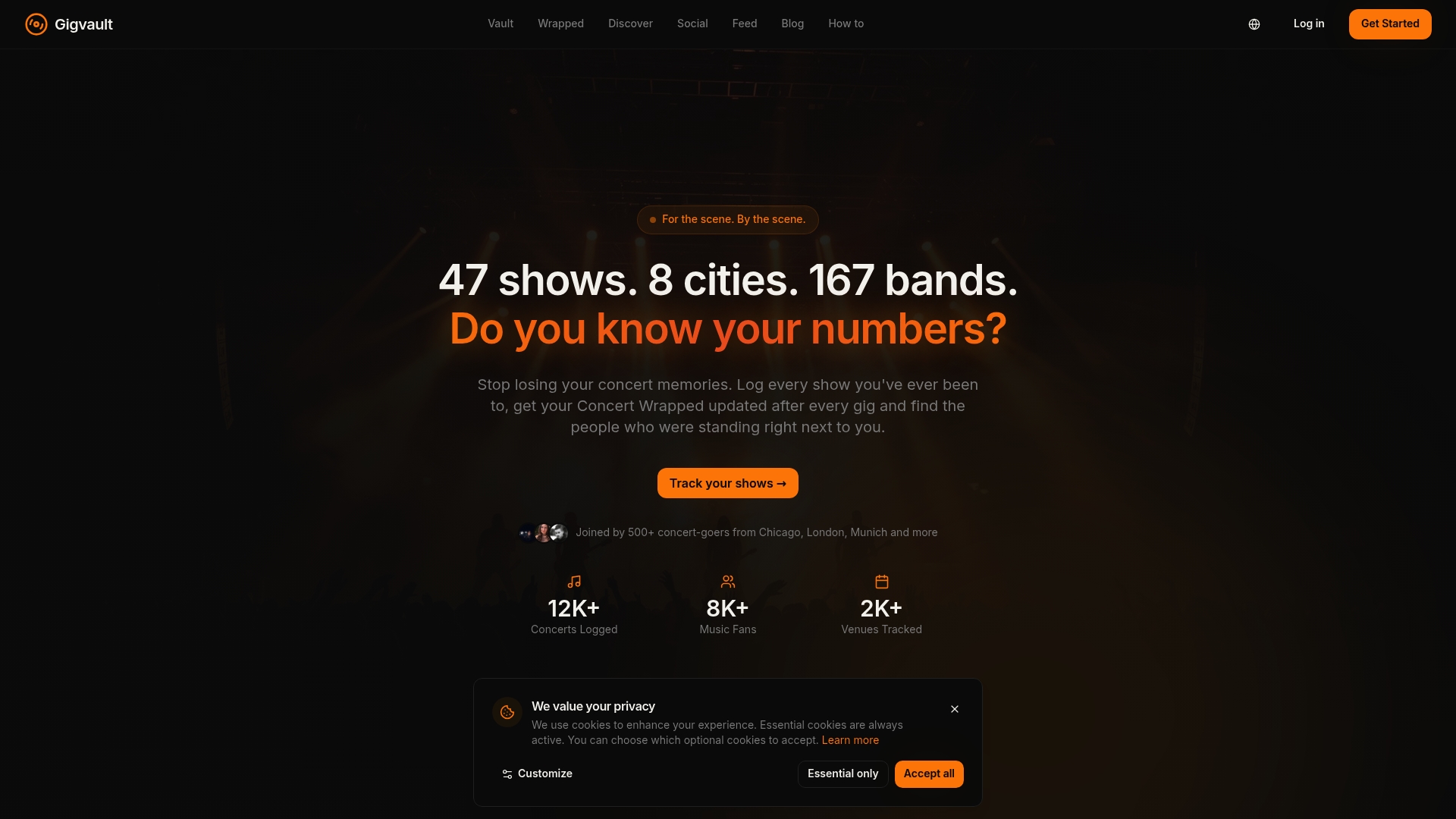
Gigvault is built specifically for fans like you. It lets you log every show you've attended, upload photos and videos, track your favorite artists and venues, and generate detailed stats about your live music history. The Gigvault features include an AI-generated Music Identity, mutual connection discovery based on shared concert histories, and a beautifully organized archive of everything you've experienced live. Start with the concert diary tool to log your first show and watch your personal archive come to life. Join a community of fans who are done letting their concert memories fade.
Frequently asked questions
What makes a live music archive different from a regular playlist or photo album?
A live music archive organizes all elements of a concert, including audio, setlists, tickets, photos, and memories, into one cohesive record. Archives go beyond playlists by curating setlists, memorabilia, and recordings together in a way a simple album never could.
Is it legal to share live concert recordings online?
Sharing live recordings often requires the artist's consent, and many trading communities prohibit unauthorized uploads. Artist consent is required for recording and sharing under copyright law, so always verify before posting.
How can I make sure I don't lose my concert archives?
Follow the 3-2-1 backup rule: keep three copies on two different types of storage with one offsite or in the cloud. 3-2-1 backups are recommended as the gold standard for protecting digital archives long-term.
Which platform should I use to start my archive?
Platforms like Gigvault, Setlist.fm, and Concert Archives are popular for their intuitive tools and strong fan communities. Fan-driven platforms offer tools for archiving and sharing with global communities of dedicated music lovers.
What's the difference between audience and soundboard recordings?
Audience recordings capture crowd energy and ambiance, while soundboard recordings offer clearer audio with less background noise. Soundboard and audience recordings each offer unique listening experiences depending on what you value most.