
TL;DR:
- Documenting concerts transforms fleeting memories into a personal and shared music history.
- Sharing concert logs fosters community, connection, and deeper appreciation among fans.
- Tracking shows provides insights into your music preferences and contributes to cultural preservation.
You've been to hundreds of shows. You remember the feeling of the bass in your chest, the crowd singing every word, the moment your favorite song hit. But ask yourself: can you actually name the setlist from three years ago? Concert memories are vivid right after the show, then slowly blur into a general feeling of "that was amazing." Keeping a concert history changes that. It turns scattered memories into a living archive you can revisit, share, and build on. This guide walks you through why documenting your concerts matters, which tools make it easy, and the surprising ways it deepens your connection to music and the people who love it.
Table of Contents
- The value of documenting your concert experiences
- Social connection: Sharing memories and building community
- Unlocking music insights: Stats, trends, and personal 'Wrapped' moments
- Digital tools: How to document and organize your concert history
- Preserving cultural history: The bigger impact of personal concert archives
- Why most people underestimate the joy of concert tracking
- Start building your concert legacy with Gigvault
- Frequently asked questions
Key Takeaways
| Point | Details |
|---|---|
| Memories made permanent | Logging concerts keeps special moments alive and ensures none fade away. |
| Social and community boost | Documented concert histories help you reconnect with friends and form deeper music bonds. |
| Personal music analytics | Apps turn your concert data into personalized insights and Wrapped-style stats. |
| Cultural legacy | Your archive isn’t just for you—it contributes to preserving music history for all fans. |
The value of documenting your concert experiences
Every concert is a one-time event. The exact setlist, the crowd energy, the opening act you didn't expect to love — none of it repeats. That's what makes live music so powerful, and also what makes it so easy to forget.
People have been archiving their show attendance for decades, long before apps existed. The 10,000 recordings digitized into an online archive by lifelong music fans, or "Concert Joe" who attended 24,000 shows and kept tubs of ticket stubs, show just how deep this impulse runs. These aren't outliers. They're extreme examples of something most music fans feel: the need to hold onto what they experienced.
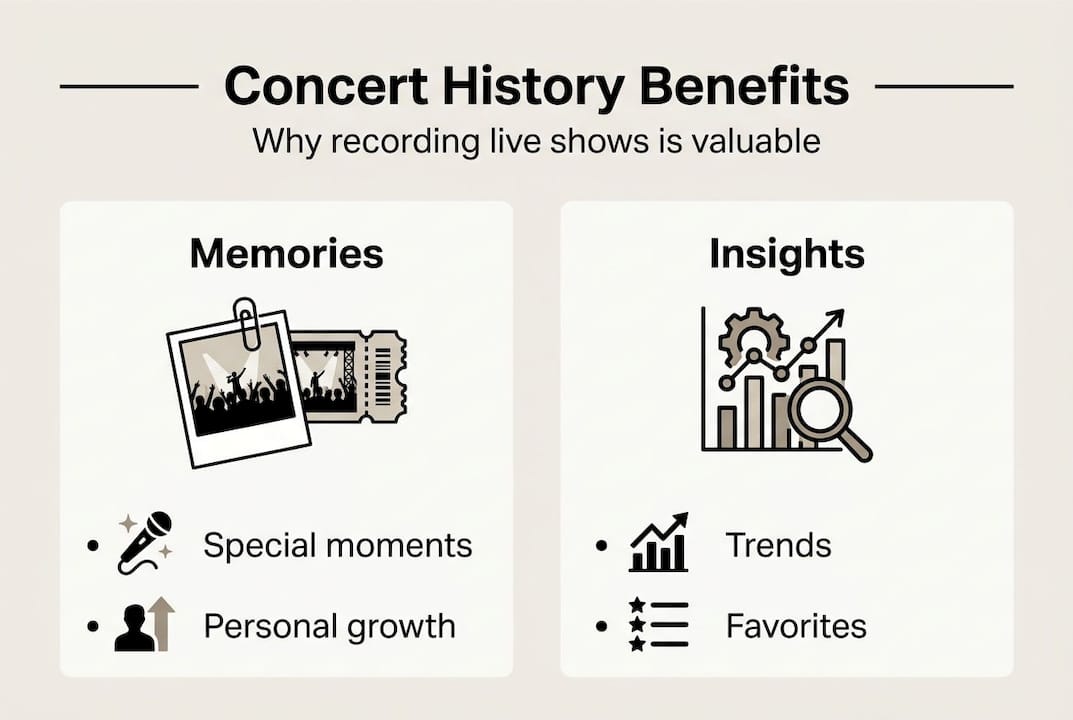
A personal concert archive works like a nostalgia bank. You deposit memories right after a show, and you can withdraw them years later with full context intact. It also becomes a natural talking point. When you meet someone who saw the same band in the same city, your archive is proof. It's a shared moment you can both point to.
The benefits of tracking concerts go well beyond simple record-keeping. Here's why music fans are motivated to document their shows:
- Emotional preservation: Concerts are tied to specific moments in your life. Logging them keeps those emotional anchors accessible.
- Social currency: Shared attendance creates instant bonds with other fans.
- Knowledge building: Tracking setlists and venues deepens your understanding of artists' careers and touring patterns.
- Personal identity: Your concert history reflects who you are and what you value.
- Cultural contribution: Your archive adds to a larger collective record of live music history.
"The primary motivation for fans is building a digital backup of live experiences for nostalgia and sharing, fostering community around shared attendance."
This is exactly why a guide to tracking live music is worth reading before your next show. The habit pays off fast.
Social connection: Sharing memories and building community
Once you understand the personal value, it's time to see how concert histories connect you with others.
Sharing your concert log isn't about bragging. It's about finding your people. When you post that you saw a band in a small venue five years ago, someone else who was there lights up. That shared experience becomes the foundation for a real connection, sometimes stronger than years of casual friendship.
Platforms like Gigvault and Concert Archives let you log shows with photos, notes, and setlists, then share them with friends who attended the same events. The "Concert Buddies" feature is a good example of how this works in practice. You tag people who were at the show with you, and that memory becomes something you both own. It's not just your archive anymore. It's a shared one.
The same research that highlights the nostalgia value of concert logging also points to community around shared attendance as a core driver. People aren't just saving memories for themselves. They're building bridges.
Here's how concert history tools foster community:
- Joint memory creation: Tag friends who attended and build a shared log of the night.
- Event reminiscing: Look back at old shows together and rediscover details you both forgot.
- Music discovery: See what shows your connections have attended and find new artists to explore.
- Conversation starters: Your archive gives you instant common ground with new people.
- Collective nostalgia: Group recaps of festivals or tours bring friend groups closer.
The shared concert bonds you build through these features are genuinely different from regular social media interactions. There's no algorithm pushing content at you. It's just people who love the same music, connecting over real experiences.
Pro Tip: Before sharing your concert log publicly, think about what details you want visible. Some fans prefer to keep their archive private and only share specific shows with close friends. Start with a small circle and expand as you get comfortable.
Unlocking music insights: Stats, trends, and personal 'Wrapped' moments
Concert history isn't just about memories. It's a goldmine of personalized insights too.
When you log enough shows, patterns emerge. You start to notice you've seen the same artist seven times. You've visited 14 cities for concerts. You always end up at the same three venues. These aren't just fun facts. They tell a real story about your relationship with live music.

Apps like Gigvault generate real-time personalized stats that update automatically after each show you log. Think of it like a Wrapped recap, but for your entire concert history and updated constantly, not just once a year.
Here's an example of what your stats breakdown might look like:
| Stat category | Example data |
|---|---|
| Top artist | Seen 9 times |
| Favorite venue | Madison Square Garden (6 visits) |
| Cities visited | 18 cities across 5 years |
| Most active year | 2023 (22 shows) |
| Genres tracked | Rock, indie, electronic |
To get started with a concert tracking app and build your own stats, follow these steps:
- Download your app of choice and create a profile.
- Log your most recent show first to build momentum.
- Work backward through your memory and ticket stubs to fill in past concerts.
- Add photos and setlists to each entry for richer context.
- Check your stats dashboard after every new show to watch your insights grow.
You can remember every concert more clearly when you have a structured place to store the details. And once your archive reaches a certain size, the stats become genuinely surprising. Most people have no idea how many shows they've actually attended until they see the number in front of them.
Exploring the apps to track concerts available today will help you find the right fit for your logging style.
Digital tools: How to document and organize your concert history
Now let's dig into the modern tools that make preserving your concert history easy and even enjoyable.
Gone are the days of shoeboxes full of ticket stubs. Today's platforms let you build a visual, searchable archive with photos, setlists, ratings, and notes all in one place. The right tool depends on what matters most to you.
Here's a quick comparison of features across popular concert tracking options:
| Feature | Gigvault | Setlist.fm | Spreadsheet |
|---|---|---|---|
| Photo uploads | Yes | No | No |
| Setlist support | Yes | Yes | Manual |
| Personalized stats | Yes (auto) | Limited | Manual |
| Social sharing | Yes | Limited | No |
| Concert Buddies | Yes | No | No |
| AI Music Identity | Yes | No | No |
As you can see, dedicated apps like Gigvault offer far more than a basic log. The best concert tracker apps combine memory storage with social features and automatic analytics, making the whole process feel rewarding rather than like homework.
The key to a well-maintained archive is building a habit right after the show. Logging a concert while the details are fresh takes about two minutes. Trying to reconstruct it six months later takes much longer and loses accuracy.
Pro Tip: Set a post-concert routine. As soon as you get home or on the ride back, open your app and log the basics: artist, venue, date, and one standout moment. Add photos the next morning. This two-step approach keeps the habit light and consistent without overwhelming you after a late night.
A well-organized archive also makes it easy to organize concert archives in ways that support both personal nostalgia and community sharing over time.
Preserving cultural history: The bigger impact of personal concert archives
Documenting your own concerts does more than jog your memory. It serves a broader cultural purpose.
When thousands of fans each log their own experiences, something remarkable happens. Individual archives combine into a collective record of live music history. Setlists get verified. Rare performances get documented. Artists' touring histories become searchable. Your personal archive is a small piece of something much larger.
This isn't theoretical. The 10,000 recordings digitized by dedicated fans into an online archive show what's possible when individuals take preservation seriously. These recordings capture performances that would otherwise be completely lost.
"Empirical cases like 'Concert Joe' attending 24,000 shows with tubs of ticket stubs demonstrate how individual dedication creates irreplaceable historical records of live music culture."
Here's the broader impact your archive contributes to:
- Fan culture preservation: Your logs help document the social history of live music communities.
- Research value: Music historians and journalists rely on fan-sourced data to verify facts and timelines.
- Bridging generations: Younger fans can discover what shows were like before they were old enough to attend.
- Artist legacy: Detailed fan archives often capture career-defining moments that official records miss.
- Community memory: Collective archives give fan communities a shared history to rally around.
Getting involved in enriching music history doesn't require any special expertise. You just need to start logging. Every show you document adds to something bigger than yourself.
Why most people underestimate the joy of concert tracking
Here's what most guides miss: the real reward of keeping a concert history isn't the archive itself. It's who you become through the process.
Conventional wisdom treats concert logging as a hobby for superfans with hundreds of shows under their belt. That's wrong. The fans who get the most out of tracking are often the ones who started early, before they had much to log. Reliving your first few shows years later, with full context and photos attached, does something to your sense of personal identity that's hard to explain until you experience it.
Tracking concerts also builds a kind of long-term happiness that's easy to underestimate. The hidden rewards of concert logs compound over time. A show that felt ordinary in the moment can become extraordinary in hindsight, especially if the artist later became huge or the venue closed down.
Don't wait until you have a big collection to start. Start now, with your next show. What feels routine today will feel precious in five years.
Start building your concert legacy with Gigvault
Ready to turn your concert-going into a living, growing archive? Gigvault makes it simple to start, whether you're logging your first show or your five hundredth.
With Gigvault, you can set up your profile in minutes and immediately start logging shows with photos, setlists, and personal ratings. The platform's features include automatic stat updates after every new entry, Concert Buddies for tagging friends, and an AI-generated Music Identity that reflects your unique live music story. You can even track concerts by artist to see your full history with specific acts. No algorithms, no noise. Just your memories, organized and growing. Your future self will thank you for starting today.
Frequently asked questions
What is the best app to track concerts I've attended?
Gigvault and Concert Archives are two strong options that let you log shows with photos, add setlists and notes, and enjoy personalized stats that update automatically after each new entry.
Why should I bother keeping track of concerts?
Keeping a concert log preserves treasured memories and lets you connect with friends over shared experiences. Research also shows the primary motivation is building a digital backup of live experiences for nostalgia and community.
What kind of stats can I get by tracking my concerts?
Platform apps can show your top artists, favorite venues, cities visited, and yearly trends. Gigvault even generates Wrapped-style highlights automatically after each show you log, so your insights are always current.
Does concert logging help with music discovery?
Absolutely. Reviewing your archive can surface patterns in your taste and point you toward artists you've seen once but never fully explored. Shared archives with friends also open up natural recommendations based on real attendance history.