
Concert venue rankings shape how we discover and choose live music experiences, but they vary wildly depending on who's doing the ranking. Billboard blends editorial judgment with box office data, while Pollstar focuses purely on revenue and ticket counts. Some lists celebrate intimate acoustic gems, others crown stadiums pulling in millions per show. Understanding these different approaches helps you cut through the noise and find venues that match your concert priorities, whether that's pristine sound quality, historic ambiance, or simply the biggest acts in town.
Table of Contents
- Key takeaways
- How concert venues are ranked: key players and criteria
- Revenue, attendance, and capacity: the numbers behind rankings
- Beyond numbers: editorial judgment, experience, and acoustics in rankings
- Choosing a venue: how understanding rankings enhances your concert experience
- Discover and track your favorite live shows with Gigvault
- Frequently asked questions
Key Takeaways
| Point | Details |
|---|---|
| Ranking approaches differ | Billboard blends editorial judgment with box office data while Pollstar relies on box office and capacity, making their lists reflect different priorities. |
| Data driven versus editorial | Pollstar ranks strictly by box office and capacity, while Billboard adds qualitative venue factors such as design and renovations. |
| Capacity classes matter | Rankings separate venues into tiers to ensure fair comparisons across different sizes. |
| Premium pricing boosts | High ticket prices and premium experiences can lift smaller venues into higher ranks despite larger competitors. |
| Understand ranking criteria | Knowing what each ranking weighs helps you pick venues that match your concert priorities. |
How concert venues are ranked: key players and criteria
Two major organizations dominate the concert venue ranking landscape: Billboard and Pollstar. Billboard publishes annual Top Music Venues lists combining editorial judgment and Boxscore data, creating a hybrid approach that values both financial performance and experiential factors. Pollstar ranks venues based on box-office grosses and ticket counts grouped by capacity, offering a purely data-driven perspective.
Billboard's methodology pulls from its Boxscore database, which tracks gross revenue and attendance from reported shows during a specific annual window, typically October through September. This data forms the foundation, but Billboard's editorial team layers on qualitative assessments. They consider the "wow factor" of a venue's design, recent renovations that improve fan experience, sustainability initiatives, and upgraded food and beverage services. This blend means a venue can rank highly even if its raw numbers don't dominate, provided it offers something special to concertgoers.
Pollstar takes a different route. Their rankings rely strictly on reported box office figures, grouping venues into capacity categories to ensure fair comparisons. You won't see a 2,000-seat theater competing against a 50,000-seat stadium. Categories typically include clubs under 2,000 capacity, theaters from 2,000 to 5,000, arenas from 5,000 to 15,000, amphitheaters, and stadiums over 15,000. This segmentation acknowledges that different venue sizes serve different markets and artist types.
Understanding these distinctions matters when you're choosing where to see live music. If you're hunting for best apps to track concerts and planning your next show, knowing whether a venue ranks high for revenue or experience helps you set expectations. A top-grossing arena might pack in thousands but lack the intimacy of a smaller club that earns editorial praise for its atmosphere.
Key ranking criteria include:
- Gross revenue from ticket sales during the reporting period
- Total attendance figures across all events
- Venue capacity class for fair peer comparison
- Editorial factors like architectural design and recent upgrades
- Food, beverage, and hospitality service quality
- Sustainability and environmental initiatives
Revenue, attendance, and capacity: the numbers behind rankings
Gross revenue and ticket sales form the backbone of most venue rankings. Pollstar and Billboard Boxscore both prioritize these metrics because they reflect market demand and booking success. A venue that consistently sells out shows and commands high ticket prices will naturally rise in the rankings, regardless of its size or location.
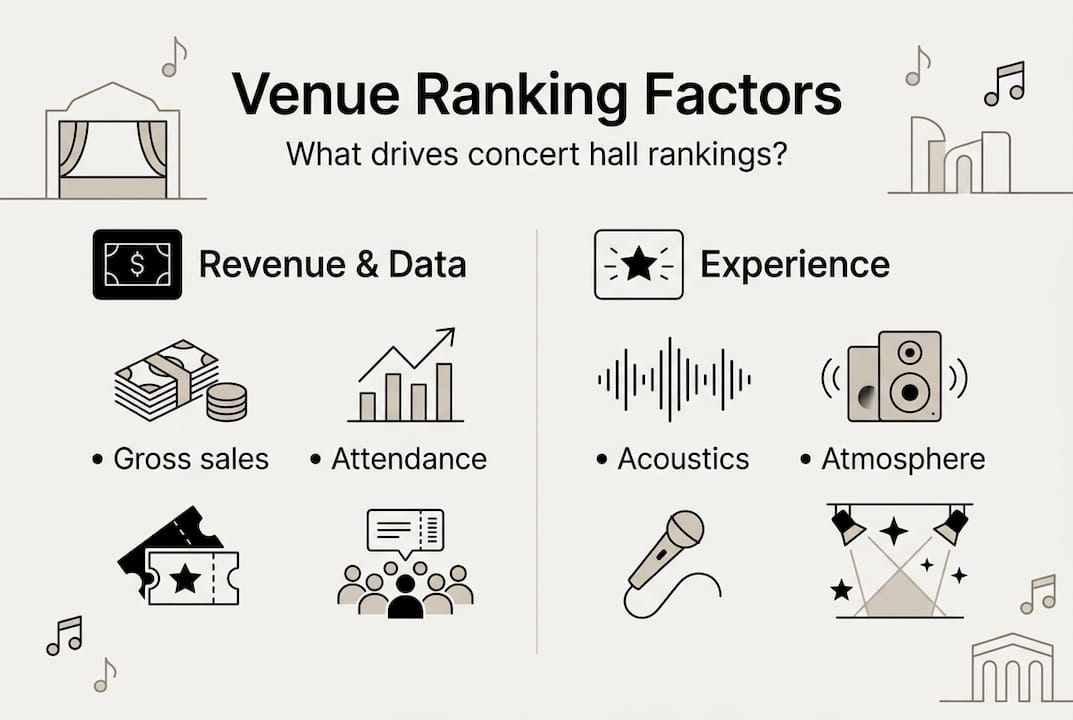
Capacity classes ensure venues compete fairly. A 1,500-capacity club can't match a stadium's total revenue, so rankings segment venues into tiers. This structure recognizes that a packed 3,000-seat theater represents a different kind of success than a half-filled 20,000-seat arena. Pollstar's 2026 data shows stadium venues averaging $7.11 million gross per show, up 19% year-over-year, with an average of 56,272 tickets sold per event. These numbers demonstrate the scale at which top-tier venues operate.
Premium pricing strategies can vault smaller venues above larger competitors in gross revenue rankings. Sphere topped rankings with $165.3 million gross from just 42 shows in midyear 2025, driven by ultra-high ticket prices and immersive technology experiences. This illustrates how per-show profitability can outweigh sheer volume. A venue charging $500 average per ticket needs far fewer attendees to match the gross of a $75-ticket arena show.
| Venue category | Typical capacity | Average gross per show | Key ranking driver |
|---|---|---|---|
| Clubs | Under 2,000 | $50,000 to $150,000 | Intimacy and artist access |
| Theaters | 2,000 to 5,000 | $200,000 to $500,000 | Acoustics and sightlines |
| Arenas | 5,000 to 15,000 | $1M to $3M | Major touring acts |
| Stadiums | 15,000 to 70,000 | $5M to $10M | Superstar events and scale |
Smaller venues sometimes face disadvantages in data-driven rankings due to underreporting. Independent clubs may not submit every show to tracking organizations, leading to incomplete revenue totals. This reporting gap can push culturally significant venues lower in rankings despite their impact on local music scenes. Year-over-year growth metrics also matter, signaling whether a venue is gaining or losing market share. Comparing Gigvault vs concert archives shows how tracking your own concert history helps you spot trends in your favorite venues over time.
Pro Tip: When evaluating venue rankings, check the reporting period and methodology. A venue might rank lower simply because it hosts fewer events per year, not because those events lack quality or demand.
Beyond numbers: editorial judgment, experience, and acoustics in rankings
Editorial rankings introduce subjective factors that pure revenue data can't capture. Billboard's editorial criteria include venue wow factor, sustainability practices, food and beverage services, and recent renovations. These elements shape the fan experience in ways that don't show up in ticket sales alone. A newly renovated theater with upgraded seating and improved concessions might rank higher than a bare-bones arena with better gross numbers.
Acoustic quality represents a scientific dimension of venue evaluation. Concert hall acoustic parameters include reverberation time (RT), clarity index (C80), and initial time delay gap (ITDG), all optimized through room design features. Reverberation time measures how long sound persists in a space, affecting whether music feels lush or muddy. Clarity index indicates how distinctly you can hear individual instruments and vocals. ITDG relates to sound intimacy, determining how "close" the performance feels regardless of physical distance.
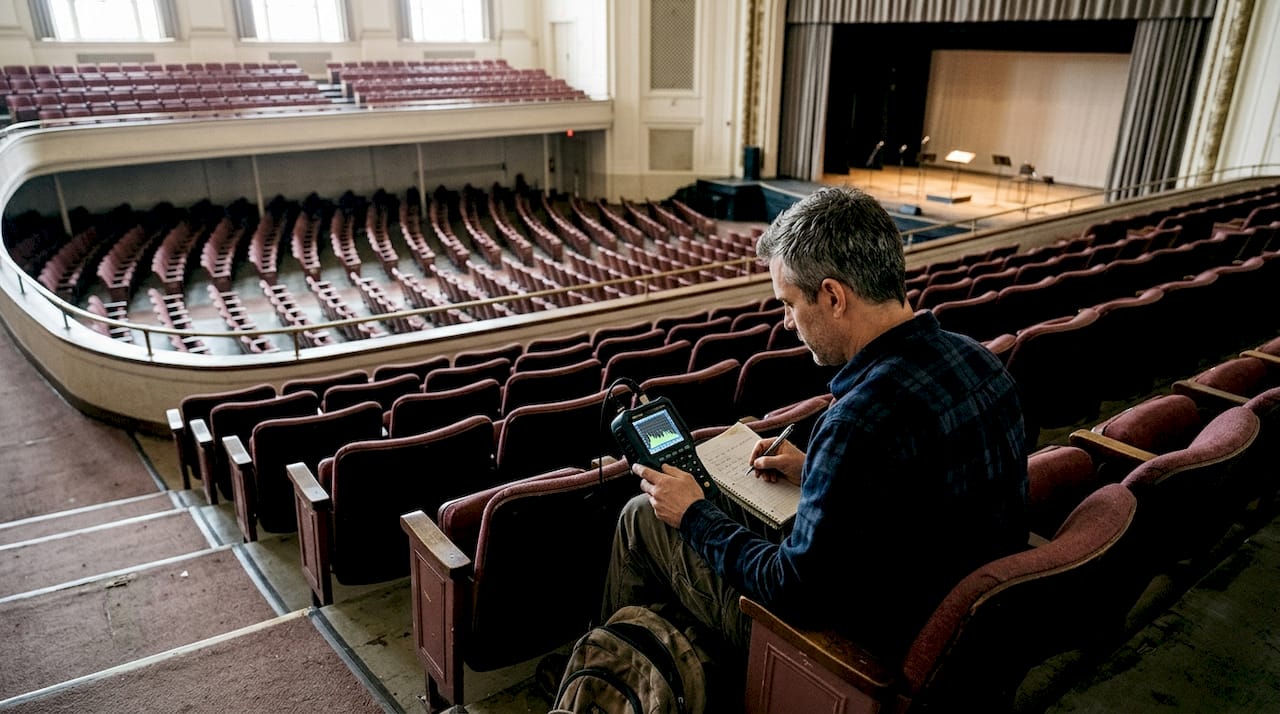
Venues with superior acoustics create memorable experiences that keep fans returning. A 3,000-seat hall with perfect sound can feel more engaging than a 10,000-seat arena where music gets lost in echoes. Acoustic consultants design spaces to balance reflection and absorption, ensuring every seat receives clear, balanced sound. This technical excellence rarely appears in mainstream rankings but matters enormously to serious music fans.
Editorial favor also flows to venues that invest in sustainability, local art partnerships, and community engagement. A venue that sources food locally, uses renewable energy, and supports emerging artists earns goodwill that translates into positive coverage. These factors might not boost gross revenue immediately but build long-term reputation and loyalty.
Key editorial and experiential factors include:
- Architectural design and visual appeal of the space
- Recent renovations improving comfort and accessibility
- Quality and variety of food and beverage options
- Sustainability initiatives and environmental responsibility
- Acoustic engineering and sound quality
- Historical significance and cultural impact
Pro Tip: Search for acoustic reviews or sound quality mentions when researching venues. Fan forums and Gigvault blog posts often highlight which spaces deliver the best listening experiences.
Smaller iconic venues earn recognition in editorial lists despite modest revenue. A legendary 500-capacity club that launched famous careers holds cultural weight that no stadium can replicate. These venues offer intimacy and artist interaction impossible in larger spaces. Editorial rankings celebrate this diversity, acknowledging that "best" means different things to different fans. Some prioritize seeing superstars in massive productions, others value discovering new acts in rooms where you can make eye contact with the performers.
"The best concert venue isn't always the biggest or highest-grossing. It's the one where the music connects with you in a way that creates lasting memories."
Choosing a venue: how understanding rankings enhances your concert experience
Applying venue ranking knowledge helps you make smarter concert choices aligned with your preferences. Start by identifying what matters most to you: ticket price, capacity, acoustic quality, or overall atmosphere. If budget is tight, smaller venues with lower average ticket prices might offer better value despite ranking lower on gross revenue lists. If you're chasing a specific artist's tour, checking which venues they frequent reveals patterns in their booking preferences.
Capacity and ticket price data guide expectations. A 15,000-seat arena show delivers a different experience than a 2,000-seat theater performance by the same artist. Larger venues mean bigger production values but less intimacy. Ticket prices correlate with demand and exclusivity. Premium venues charging top dollar often provide superior amenities and sightlines, but you're paying for those extras.
Editorial factors like atmosphere and renovations signal whether a venue prioritizes fan comfort. Recently upgraded spaces typically offer better seating, cleaner facilities, and improved food options. These upgrades might not affect the music directly but enhance your overall enjoyment. A venue that invests in its infrastructure shows commitment to the fan experience.
Acoustic quality deserves research if sound matters to you. Look for reviews mentioning clarity, balance, and volume control. Venues with poor acoustics can ruin even great performances, while well-designed spaces elevate every show. Some venues publish acoustic specifications or consultant reports, providing technical insight into their sound capabilities.
Recognize that top-grossing venues may offer premium but less intimate experiences. Sphere's massive revenue comes from cutting-edge technology and high prices, creating a spectacle unlike traditional concerts. But that spectacle comes with distance from the stage and a focus on visual effects over pure musical connection. Decide whether you want immersive production or raw performance energy.
Historic or smaller venues provide cultural richness despite modest rankings. Seeing a show at a legendary club where iconic artists performed decades ago adds emotional weight to the experience. These venues often have unique character, from vintage decor to quirky layouts, that modern arenas lack. Their lower rankings reflect financial scale, not cultural value.
Steps to choose your ideal venue:
- Identify your budget and preferred ticket price range
- Determine your comfort level with crowd sizes and capacity
- Research acoustic reviews if sound quality is a priority
- Check recent renovations and amenity upgrades
- Balance cost, capacity, and experience factors
- Explore venue histories and cultural significance
- Review rankings regularly for updated insights
Pro Tip: Use Gigvault live music platform to track which venues you've visited and rate your experiences. Over time, you'll identify patterns in which spaces consistently deliver great shows for your taste.
Balancing these factors creates a personalized venue selection strategy. You might discover that mid-sized theaters offer your ideal mix of sound quality, ticket price, and atmosphere. Or you might prioritize seeing arena tours for production spectacle, accepting trade-offs in intimacy. Understanding rankings helps you make these choices consciously rather than defaulting to whatever venue hosts your favorite artist.
Discover and track your favorite live shows with Gigvault
Now that you understand how venue rankings work, put that knowledge into action with Gigvault. Our platform helps you track every concert you attend, building a personal archive of your live music journey. Search for Electric Callboy concerts or Simple Plan concerts to see complete show histories, venue details, and setlists.
Gigvault connects the dots between artists, venues, and your concert experiences. You'll discover which venues consistently host your favorite acts, identify patterns in tour routing, and plan future shows based on venue reputations you've researched. Our detailed concert information includes venue capacity, location data, and user ratings, helping you apply ranking insights directly to your concert planning. Track your stats, see your wrapped experiences, and make every show count with the Gigvault live music platform.
Frequently asked questions
What metrics are most important in concert venue rankings?
Gross revenue, ticket sales, and capacity are the primary metrics used by Pollstar and Billboard for data-driven rankings. These numbers reflect market demand and booking success, showing which venues consistently attract audiences and generate revenue. Editorial aspects like venue atmosphere, recent renovations, and fan amenities affect some rankings, particularly Billboard's hybrid lists. Acoustic quality data may influence expert assessments but appears less frequently in mainstream commercial rankings focused on financial performance.
Why do some smaller venues rank lower despite cultural significance?
Smaller venues often underreport events to tracking organizations, leading to incomplete gross revenue data that lowers their ranking positions. Independent clubs may lack the administrative resources to submit every show, creating gaps in their reported numbers. Editorial lists frequently recognize these venues for their historic importance and intimate qualities, acknowledging their cultural impact beyond pure financial metrics. Revenue-based rankings inherently favor larger capacities and higher ticket volumes, placing smaller spaces at a structural disadvantage.
How do ticket prices affect venue rankings?
Higher average ticket prices increase gross revenue even when fewer tickets are sold, which can elevate a venue's ranking position significantly. Venues like Sphere command premium prices that generate massive per-show revenue from relatively small audience counts. This dynamic allows exclusive, high-end venues to outrank larger capacity spaces in gross revenue rankings. Pricing strategy becomes a ranking tool, with premium experiences and VIP packages boosting total revenue beyond what attendance numbers alone would suggest.
Can acoustic quality influence my concert experience when choosing a venue?
Good acoustic design dramatically enhances sound clarity, balance, and intimacy, creating more engaging and memorable concert experiences. Acoustic metrics like reverberation time and clarity index shape how well you hear individual instruments and vocals throughout the space. Fans who prioritize sound quality should actively seek venues with favorable acoustic ratings or professional design features. Poor acoustics can diminish even excellent performances, while well-engineered spaces elevate every show regardless of the artist or genre.
Recommended
- The 5 Best Apps to Track Concerts You've Been To (2025) | gigvault
- How to Remember Every Concert You've Ever Been To | gigvault
- gigvault Blog – Live Music, Gig Tracking & More
- gigvault vs Concert Archives – Which App is Better in 2026?
- Summer 2025 Hip Hop Tours: What to Expect – Stevie The Manager aka Stangr The Man